



















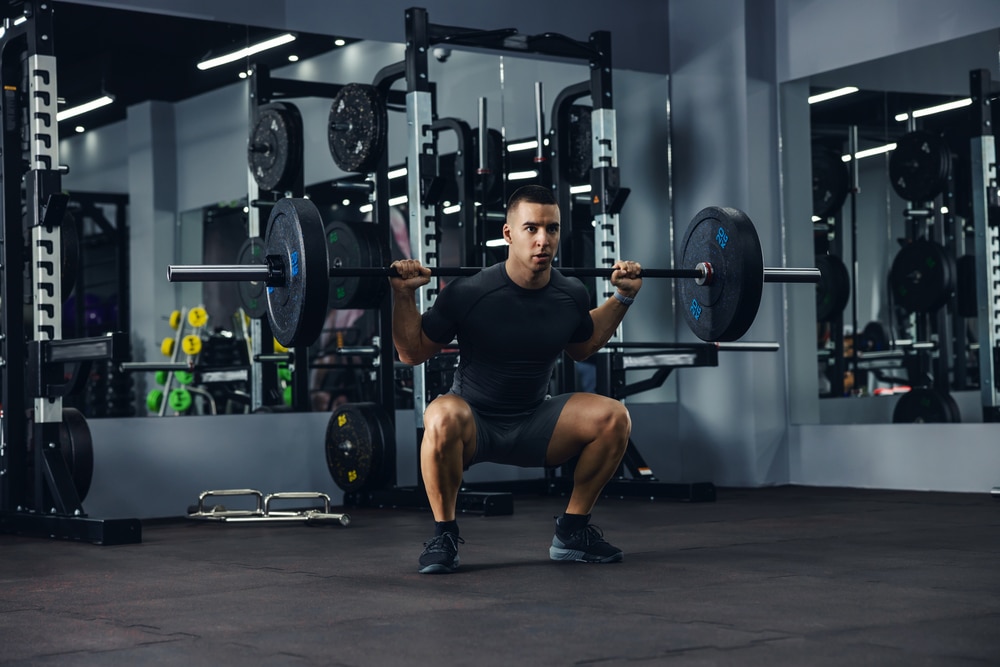
The front rack position is crucial for mastering key lifts, including the front squat, push press, clean and jerk, as well as power and hang cleans. Achieving this position generates a unique internal pressure that creates strength, a concept coined by Dan John as “anaconda strength.”
However, sustaining this position requires mobility. If your elbows dip, your wrists ache, or the bar slips into your fingertips when you squat, it’s not just bad luck. It indicates that you’re still mastering this position.
This article focuses on enhancing mobility in the relevant joints and developing a front rack that you can effectively control under load. Let’s explore the path to superior front rack mobility so you can continue to excel in your lifts.
Quick Front Rack Mobility Test: Are You Positioning Correctly?
Start by unracking an empty bar and assuming the front rack position. Check these five criteria:
- Elbows should be at or slightly above parallel to the floor.
- The bar rests on the front delts without being gripped by the hands.
- At least 2-3 fingers should be securely placed under the bar.
- Keep your chest tall without overly arching your lower back.
- There should be no sharp wrist pain.
Next, descend into a shallow front squat and hold the position for three seconds.
Watch for:
- Dropping elbows
- Rolling bar
- Upper back rounding
- Increasing wrist discomfort under load
If you encounter any of these issues, the solution isn’t lighter weights; it’s better mobility and positional stability. A correct front rack position involves more than one joint; it requires coordinated control.
To truly own the position, focus on:
- Proper thoracic extension: Your upper back needs to remain tall for elbow elevation.
- Wrist extension tolerance: Aggressive wrist extension is essential when the bar is loaded.
- Length in the triceps and lats: Tight triceps and lats inhibit elbow height.
- Scapular upward rotation and control: Your shoulder blades must stabilize on the rib cage.
- Upper back strength: While mobility puts you in position, strength helps you maintain it.
The following five exercises will specifically target these areas, ensuring the bar rests correctly, your elbows stay elevated, and the rack becomes a position you can control rather than one you merely endure.
5 Essential Mobility Exercises for Improved Front Rack Position
These exercises will not only enhance your mobility for the front rack position but also work as warm-ups prior to lifting.
Bench T-Spine Extension with Reach
This exercise promotes thoracic extension, performed with elbows resting on a bench while the hips sit back, often incorporating a dowel or plate. It effectively targets upper back extension, avoiding overcompensation from the lower back.
Why It’s Vital for Lifters: Inadequate upper back extension prevents your elbows from staying high, compromising the front rack. Many lifters mistakenly focus on fixing their wrists when the real issue lies in a stiff thoracic spine. This drill resets extension where it belongs, allowing proper mechanics without arching the lower back.
How to Perform
- Kneel before a bench, placing your elbows on it while holding a dowel or pressing palms together.
- Move your hips back toward your heels.
- Lower your chest gently between your arms.
- Keep your ribs down to avoid lowering your back.
- Focus on controlled breathing at the end range.
Programming Suggestions: Before any front rack work, do 2 sets of 5-6 slow breaths.
Front Rack Wrist Rocks
This exercise consists of a loaded wrist extension on all fours, gently rocking forward and backward to enhance wrist extension tolerance.
Why It’s Vital for Lifters: The front rack requires significant wrist extension under load. If your wrists feel strained, it may indicate inadequate extension tolerance or insufficient loading practice.
How to Perform
- Start on hands and knees, with fingers pointing towards you.
- Maintain straight elbows.
- Gently rock your shoulders forward and backward over your hands.
- Stay within a pain-free range of motion.
Programming Suggestions: Complete 2 sets of 8-10 slow rocks.
Lat & Triceps Stretch with Band
This band-assisted stretch targets the lats and triceps during shoulder flexion while keeping the ribs down. It harnesses the band for gentle overhead traction, allowing control over range and rib position.
Why It’s Vital for Lifters: Two muscle groups can restrict your front rack position:
- Lats: They resist shoulder flexion and can force the bar forward.
- Long-head triceps: Tight triceps limit elbow height.
Tension in these muscles stops your elbow from rising, causing the bar to roll into your fingertips. This exercise helps reinforce shoulder flexion and maintains proper rib alignment and scapular upward rotation.
How to Perform
- Anchor a resistance band overhead on a rack or pull-up bar.
- Grip the band, placing your upper arm below the elbow within it.
- Step forward to create tension and maintain a braced core.
- Lean forward, allowing the band to pull your arms overhead and slightly back.
- Feel the stretch along your lats and underarms. Ensure even breathing on both sides.
Programming Suggestions: Prior to front rack work, perform sets with 20-30 second holds.
Serratus Wall Slide with Lift-Off
This exercise involves forearm-supported wall slides culminating in a brief lift-off, training scapular upward rotation and rib control.
Why It’s Vital for Lifters: If your shoulder blades can’t rotate upward, your elbows may drop and your chest could collapse, destabilizing the rack position. This drill effectively trains upward movement of your shoulders.
How to Perform
- Stand facing a wall, forearms pressed against it, elbows shoulder-width apart.
- Exhale fully, bracing your core and keeping your ribs down.
- Inhale, slide your arms up the wall while pressing gently into it, and exhale.
- Lift your forearms slightly off at the top, then return them to the wall while inhaling. Reset and repeat.
Programming Suggestions: Execute 2 sets of 6-8 reps as part of your warmup.
Front-Foot Elevated Split Squat with Front Rack Hold
This split squat utilizes the front rack position with the front foot elevated to increase the mobility demand on your upper back, wrists, triceps, and lats while keeping the elbows high.
Why It’s Vital for Lifters: Mobility that disappears under tension is ineffective. This drill requires you to maintain elbow height, strengthen upper back endurance, and improve positional control in loaded conditions, bridging mobility and strength.
How to Perform
- Set the bar in your front rack position and elevate your front foot on a weight plate.
- Position your other foot behind you comfortably.
- Slowly descend into a split squat while keeping your elbows high.
- Hold the bottom position briefly before driving back up while maintaining the rack.
- Reset and repeat.
Programming Suggestions: Complete 3 sets of 5-6 reps per side with a light load, prioritizing elbow height over the weight itself.
Why Elite Lifters Treat the Front Rack as a Skill
Olympic lifters don’t rely solely on stretching or attempt to fix their wrists in hopes of improving their front rack position. Instead, they spend time perfecting the position, building upper back strength and tolerance under load. Consider it a skill worth practicing with lighter weights; the rack is not merely a position to survive; it’s one to master.