


















The Munich Cathedral holds a chilling legend tied to the footsteps—possibly those of the Devil.
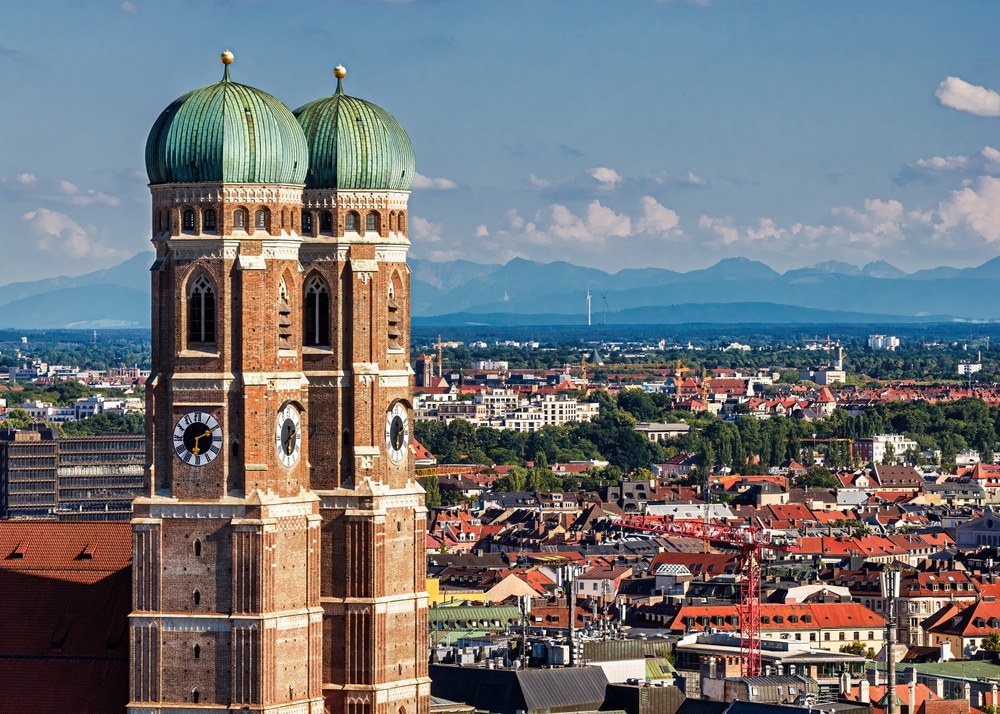
With its iconic towers that reach skyward, the Munich Cathedral is an unmistakable element of the city’s skyline. Upon entering, you step into what feels like a timeless realm, where late-Gothic architecture meets intricate stained-glass artistry. One striking feature is a 500-year-old automaton clock, showcasing whimsical figures, celestial bodies, and zodiac signs that animate daily at noon. This atmosphere radiates a sense of peace, except for the unsettling legend of the Devil’s visit.
Fables of Deception
City lore suggests a sinister footprint immortalized in the Cathedral floor, believed to belong to the Devil. Various tales exist, but a commonly told version states that construction began in 1468. A disgruntled Devil sought to thwart this sacred endeavor. He approached the architect, Jörg von Halsbach, with a deal: he would aid in construction on the condition that the church would have no windows—suggesting a celebration of darkness rather than light.
The Cathedral was built remarkably quickly, in just 20 years, perhaps thanks to the Devil’s alleged assistance. However, von Halsbach was crafty. He placed windows toward the back of the church, obscured from immediate view as a clever trick. The climax varies by the storyteller. In one rendition, the Devil inspects his work, only to realize he had been outsmarted, stamping his foot in fury. Visitors today can still spot this mark, known as the Teufelstritt, or “Devil’s footprint,” a blackened spot just inside the Cathedral where he felt the sting of betrayal.
Another version claims the Devil initially reveled in the absence of windows. Upon realizing his ruse failed, he supposedly transformed into a gust of icy wind that allegedly haunts the Cathedral to this day.
Visiting the Cathedral, you may well experience gusty drafts, as the towering structure in the heart of the city creates prime conditions for wind tunnels. If folklore is credible, these chilly breezes might be the Devil’s ongoing attempt to topple the Cathedral, driven by embarrassment at being outwitted.
So, which story should one embrace? Jake Slisz, owner and guide at Heart of Munich Tours, points out that folklore transcends a simple narrative. It’s about cultural sharing.
“The elusive origins of these stories make their retelling even more exciting,” Slisz explains. “Human civilization thrives on stories. While not always factual, they offer glimpses into our heritage.”
He speculates that the footprint may belong instead to the architect, who passed away soon after the Cathedral’s completion. If it were indeed the Devil, Slisz muses, he must have had stylish footwear, judging by the human-like shape of the print.
The Frauenkirche, Munich’s Cathedral.
Exploring the Devil’s Footsteps Further
Scotti Stephens, a guide and owner of BayernTrips, reveals that Bavaria, and Munich specifically, comes steeped in Devil-related tales. Just north in Regensburg, famed for its UNESCO Heritage status, the Devil purportedly aided in constructing the impressive Stone Bridge (Steinerne Brücke) across the Danube River’s northern tip.
According to Stephens, the prideful builder of the bridge wagered with the Cathedral’s architect on whose project would finish first. Realizing the Cathedral was rapidly nearing completion, he implored the Devil for assistance. In exchange for swift construction, the Devil demanded the souls of the first three living beings to cross the bridge.
Once the bridge was completed—quite hastily, reminiscent of the Cathedral—the builder faced a dilemma. At the grand celebration, he realized the initial takers across the bridge would be bound for eternal damnation. In a clever maneuver, he sent a rooster, hen, and dog across, cheating the Devil of his promised payment.
What the ramifications? Similar to Munich Cathedral, the enraged Devil sought to destroy the builder’s creation.
“He surged beneath the bridge, attempting to wreck it and uproot it from the river floor. But the bridge was too sturdy,” Stephens explains. “His efforts only left a distinct bump in its structure. Today, that arch stands as a testament to the Devil’s futile rage.”
While Bavaria’s landscape—decorated with charming half-timbered houses, the fairy-tale like Neuschwanstein Castle framed by the Alps, layered with tales of guilt and ancient pacts—provides fertile ground for captivating folklore, the “physical” remnants of the Devil are not confined to Bavaria.
European folklore deeply explores themes surrounding the Devil and dark forces, often accompanied by tangible proof. In South Devon, England, you can uncover stories of mysterious hoof prints. Meanwhile, in Lübeck, Germany, the Gothic St Mary’s Church exhibits “Devil’s evidence” in the form of a stone slab, a remnant of a similar incident where the Devil aimed to lend a hand in construction.
Regardless of your belief in the legend’s origins, the story surrounding Munich Cathedral conveys a captivating narrative that reflects broader German folklore’s engagement with its darker, magical elements that continue to draw throngs of visitors.