
















Key Takeaways
Nuts such as pistachios and walnuts deeply nourish our bodies, supporting heart health, gut function, and metabolism.
Pistachios shine with higher protein and fiber per serving, while walnuts stand out due to their abundant omega-3 fatty acids.
While pistachios may help with feelings of fullness, blood sugar management, and cholesterol balance, walnuts boast rich anti-inflammatory properties and benefits for brain function.
Both can be enjoyed in moderation as part of a balanced, varied diet—just be mindful of portion sizes since both types are calorie-dense.
Pistachios and walnuts are nutrient-packed, offering healthy fats, proteins, fibers, vitamins, and minerals. They share many similarities in terms of their nutritional profiles but differ significantly in the amounts of specific nutrients, notably omega-3 fatty acids, where walnuts excel compared to pistachios.
Nutrition Comparison
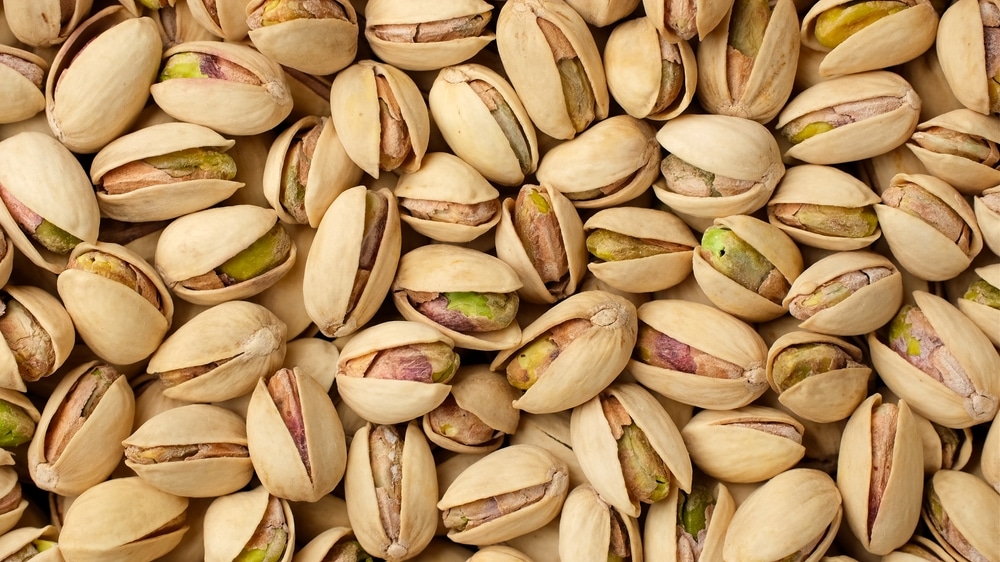
Let’s examine the nutritional profile for 1 ounce of raw pistachios (about 49 kernels) compared to 1 ounce of unroasted English walnuts (approximately 14 halves).
— | —
Calories | 158 | 185
Protein | 5.84 grams (g) | 4.32 g
Total fat | 12.6 g | 18.49 g
Saturated fat | 1.54 g | 1.74 g
Carbohydrates | 7.93 g | 3.89 g
Fiber | 2.92 g | 1.9 g
Sugar | 2.17 g | 0.74 g
Calcium | 30.33 milligrams (mg) | 27.78 mg
Iron | 1.18 mg | 0.82 mg
Magnesium | 34.3 mg | 44.79 mg
Phosphorus | 138.92 mg | 98.09 mg
Potassium | 290.59 mg | 125.02 mg
Vitamin A | 156.78 International Units (IU) | 5.67 IU
Zinc | 0.62 mg | 0.88 mg
Vitamin E | 0.65 mg | 0.2 mg
Vitamin C | 1.42 mg | 0.37 mg
Folate | 14.46 mg | 27.78 mg
Which Is Better for Protein?
Both pistachios and walnuts provide plant-based protein.
Pistachios:
– Provide more protein than walnuts.
– Offer a higher essential amino acid ratio compared to many commonly consumed nuts.
– Contain a significant amount of branched-chain amino acids essential for human health.
– Include all essential amino acids, qualifying them as a complete protein.
– Supply roughly 10% of the daily value (DV) for protein in a single serving.
– Represent approximately 20% of their total weight in protein.
Walnuts:
– Deliver less protein than pistachios but still serve as a plant-based protein source.
– Contain all nine essential amino acids, allowing them to function as a complete protein.
Which Is Better for Healthy Fats?
Pistachios and walnuts are both rich in unsaturated fats, often referred to as “healthy fats.” These fats can aid in reducing levels of low-density lipoprotein (LDL) cholesterol, potentially lowering the risk of cardiovascular diseases.
Pistachios:
– Have a lower total fat content compared to walnuts.
– Contain 12.6 g of fat per ounce, with 54% from monounsaturated fats and 31% from polyunsaturated fats.
– Include oleic and linoleic fatty acids beneficial for heart health.
Walnuts:
– Have higher total fat content than pistachios.
– Provide 18.49 g of fat per ounce, with 72% classified as polyunsaturated fats and 14% as monounsaturated fats.
– Are a prime source of alpha-linolenic acid (ALA), a plant-based omega-3 fatty acid known for its anti-inflammatory benefits, potentially reducing heart disease risk.
– Represent the tree nut with the highest ALA content.
Which Is Better for Fiber?
Both pistachios and walnuts are sources of dietary fiber that can bolster digestive health, aid in blood sugar control, and promote heart wellness.
Pistachios:
– Contain more fiber than walnuts.
– Offer 2.92 g of fiber per ounce, fulfilling about 11% of the daily value (DV).
– Have 10% of their weight in insoluble fiber and 0.3% in soluble fiber.
Walnuts:
– Provide less fiber than pistachios but still contribute beneficial fiber.
– Contain 1.9 g of fiber, corresponding to about 7% of the daily value (DV).
Other Benefits of Pistachios and Walnuts
These nuts are also abundant in beneficial nutrients such as:
– Potassium (notably in pistachios)
– Phosphorus
– Magnesium
– Calcium
– Vitamin A (especially in pistachios)
– Vitamin E
– Vitamin C
– Vitamin K
– Folate (more prevalent in walnuts)
– Vitamin B6
– Manganese
– Thiamin
– Plant sterols
– Phenolic compounds
– Antioxidants
Consuming pistachios and walnuts can provide numerous health benefits, including:
– Supporting heart health
– Lowering LDL cholesterol
– Promoting feelings of fullness and aiding weight management
– Assisting in blood sugar regulation
– Enhancing cognitive function (particularly with walnuts)
– Combatting inflammation
– Helping regulate blood pressure
Pistachio Recall
Recently, there have been widespread recalls involving certain pistachios and pistachio products in the United States and Canada. Ensure you verify that your pistachio items are unaffected before consumption.
Ways to Add Pistachios and Walnuts to Your Diet
Both pistachios and walnuts can be enjoyed alone or incorporated into a variety of dishes. Remember to pay attention to portion sizes since these nuts are calorically dense yet highly nutritious.
Some ideas for including pistachios and walnuts in your meals:
– Top salads, yogurts, cereals, and dips
– Add to pasta dishes
– Include in stir-fries
– Mix into salsas
– Use in marinades
– Create a crust for lean fish, poultry, or casseroles
– Combine with other nuts and seeds such as almonds, pecans, cashews, sunflower seeds, and pumpkin seeds
– Incorporate into baked goods like muffins and breads
– Substitute for higher saturated fat foods, such as red meat