




















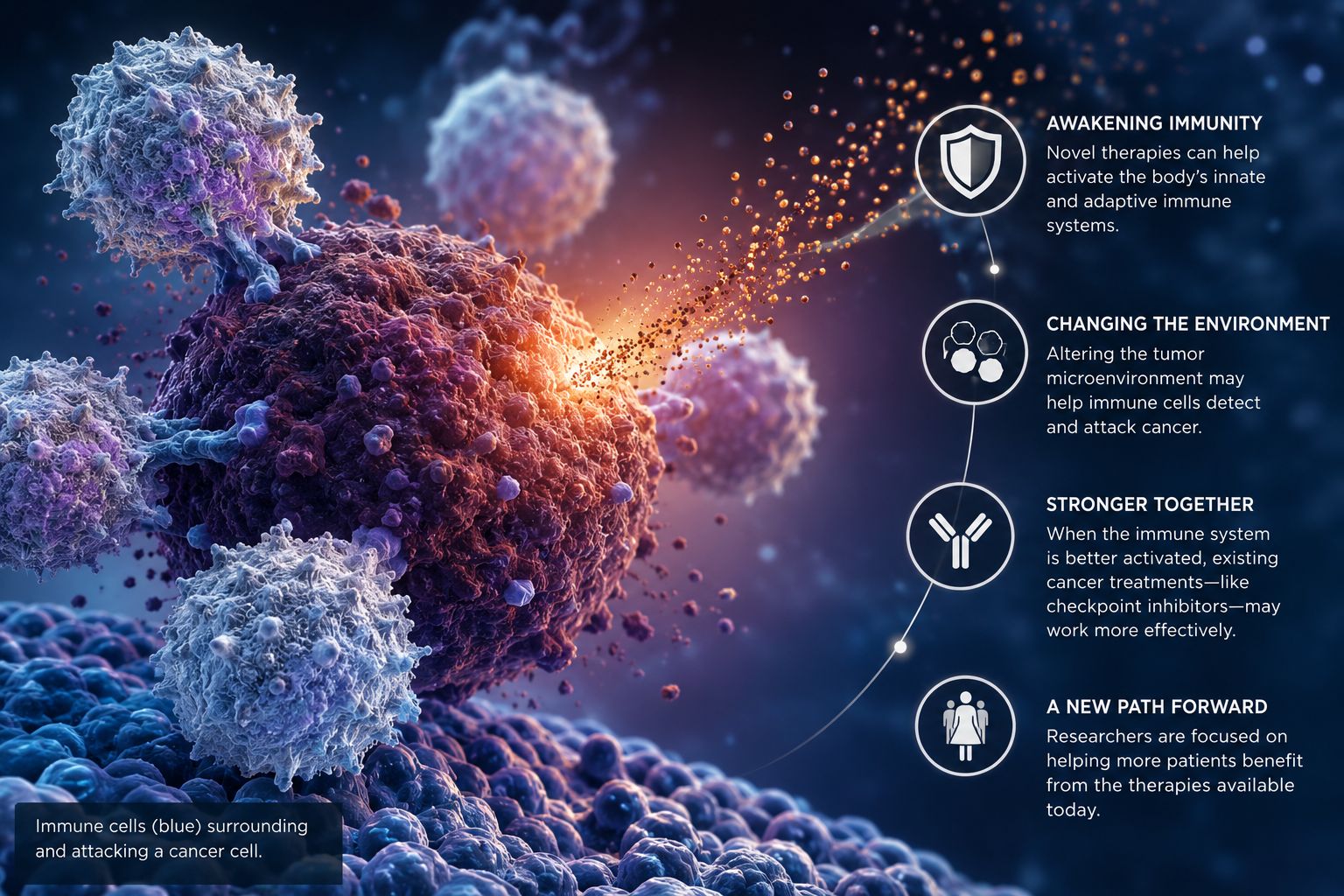
Not long ago, cancer research focused primarily on one goal: finding treatments capable of destroying cancer cells more effectively than the therapies that came before them.
That mission hasn’t changed. What has changed is where many scientists are looking for the next advance.
Instead of concentrating only on the cancer itself, researchers are paying much closer attention to the body’s immune system and the role it plays in recognizing, attacking, and sometimes overlooking tumors. The result has been one of the most significant shifts in modern oncology, with immunotherapy becoming an important part of treatment for many cancers.
The challenge is that the immune system doesn’t respond to every tumor in the same way.
Some cancers naturally attract immune cells, making them more responsive to immunotherapy. Others remain largely hidden, allowing tumors to continue growing despite treatment. Researchers often describe these as immunologically “cold” tumors because they generate little immune activity.
Helping the immune system recognize those cancers has become one of oncology’s most active areas of investigation.
Researchers are no longer focused only on discovering the next standalone therapy. They’re also exploring how existing treatments can become more effective when paired with therapies that activate the immune system in different ways.
Companies of every size are contributing to that effort. Some of the most interesting work is coming from biotechnology companies studying how immune-based therapies might strengthen treatments that physicians already use every day.
Among the companies exploring that approach is Oncolytics Biotech (NASDAQ: ONCY).
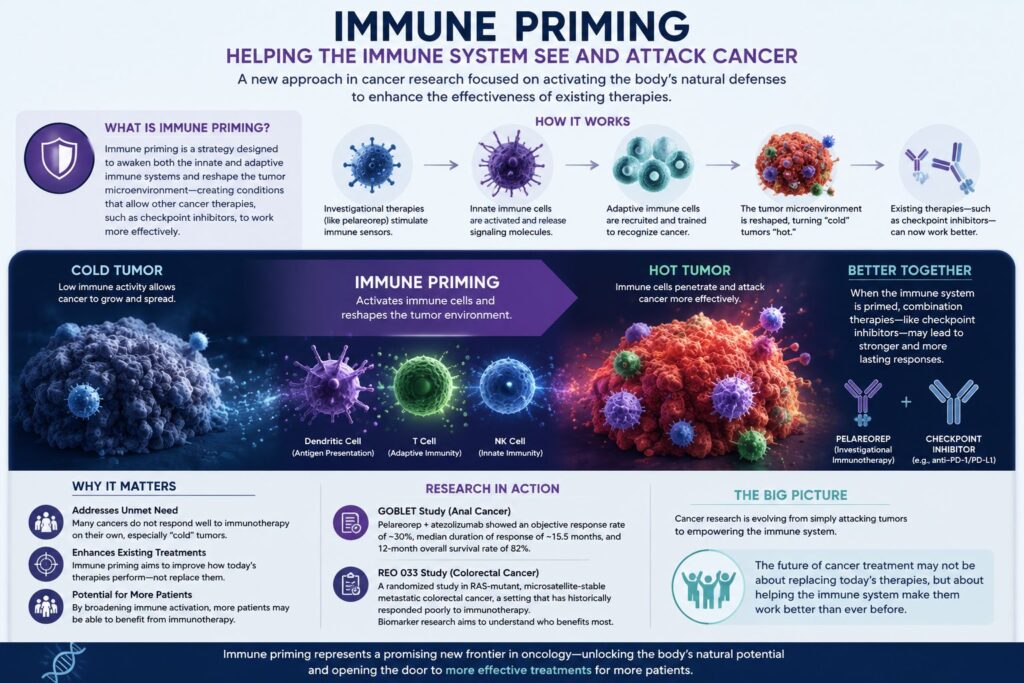
Rather than developing its investigational immunotherapy, pelareorep, as a replacement for existing cancer treatments, the company has spent years studying whether it can help the immune system respond more effectively alongside therapies already used in clinical practice. By activating both the innate and adaptive immune systems and reshaping the tumor microenvironment, researchers believe pelareorep may help create conditions that allow existing therapies—including checkpoint inhibitors—to work more effectively.
That strategy recently reached an important regulatory milestone when the U.S. Food and Drug Administration granted Fast Track designation to pelareorep in combination with a checkpoint inhibitor for patients with second-line and later squamous cell carcinoma of the anal canal (SCAC), a disease where treatment options become extremely limited after progression on first-line therapy.
Fast Track designation is intended to facilitate the development of therapies addressing serious diseases with significant unmet medical needs. While it is not an approval, it creates opportunities for more frequent communication between developers and the FDA as clinical programs continue to evolve.
The designation followed encouraging findings from the company’s GOBLET study, where pelareorep was evaluated alongside the checkpoint inhibitor atezolizumab. Researchers reported an objective response rate of approximately 30%, a median duration of response of approximately 15.5 months, and a 12-month overall survival rate of 82%. Those findings supported continued investigation while underscoring the importance of larger clinical studies to further evaluate the therapy.
The same philosophy is also shaping the company’s work in colorectal cancer.
Oncolytics recently launched its randomized REO 033 study in patients with RAS-mutant, microsatellite-stable metastatic colorectal cancer, a form of colorectal cancer that has historically responded poorly to immunotherapy. Alongside traditional clinical endpoints, investigators are incorporating biomarker research to better understand why some patients respond more favorably than others. That information could help guide future treatment decisions while advancing more personalized approaches to cancer care.
The questions researchers are asking today look very different from those they were asking just a few years ago.
The conversation is no longer limited to finding another medicine capable of attacking cancer cells. Scientists are also exploring how to activate the immune system more effectively, how different therapies can complement one another, and how treatments can be tailored to the biology of individual tumors.
Every investigational therapy must still demonstrate safety and effectiveness through carefully designed clinical trials, and many promising ideas never become approved medicines. That’s the reality of oncology research.
What is changing is the way scientists think about the next advance.
Instead of searching only for treatments that replace today’s standard of care, researchers are increasingly asking how the immune system can help existing therapies perform better. If that approach continues to deliver encouraging results, the next chapter of cancer treatment may be defined not by replacing today’s medicines, but by helping them achieve more than they could on their own.