


















For someone living with a serious neurological condition, the prospect of another medical procedure can be exhausting. There may already have been years of testing, medications that haven’t worked, and difficult decisions about what comes next. Even when physicians know where a problem originates, treating it can involve additional surgery, specialized equipment, and another hospital stay.
New medical technology is beginning to change some of those possibilities, with advances that are surprisingly small in physical size but potentially significant in how care is delivered.
One example comes from NeuroOne Medical Technologies Corporation, a Minnesota-based medical-device company developing exceptionally thin electrodes and systems that allow physicians to perform certain diagnostic and therapeutic functions using the same implanted device.
For patients with difficult-to-treat epilepsy and other neurological conditions, the approach could mean fewer procedural steps and a more coordinated path from diagnosis to treatment.
Why Thinner Electrodes Matter
The brain communicates through electrical signals. When those signals become abnormal, as they can in epilepsy, physicians sometimes need to monitor activity directly from the brain to determine where seizures originate.
That process may involve placing electrodes on the brain’s surface or within specific areas of brain tissue. The electrodes collect electrical information that helps doctors understand what is happening and whether a targeted treatment might be appropriate.
Traditional cortical electrodes are commonly made using silicone-based materials. Although they have been used successfully for many years, their thickness and flexibility affect how they rest against delicate tissue.
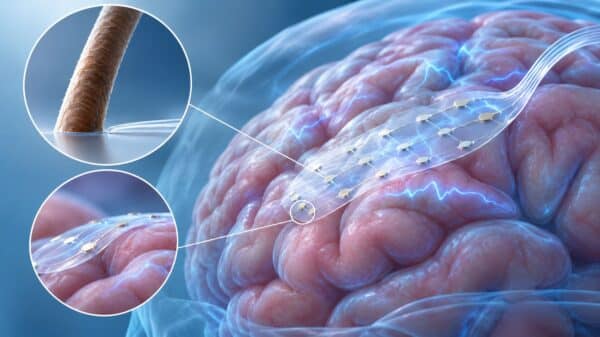
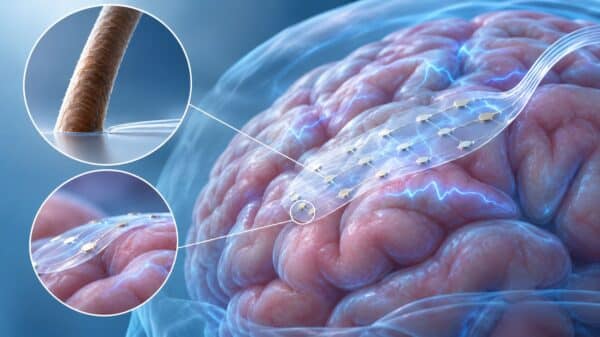
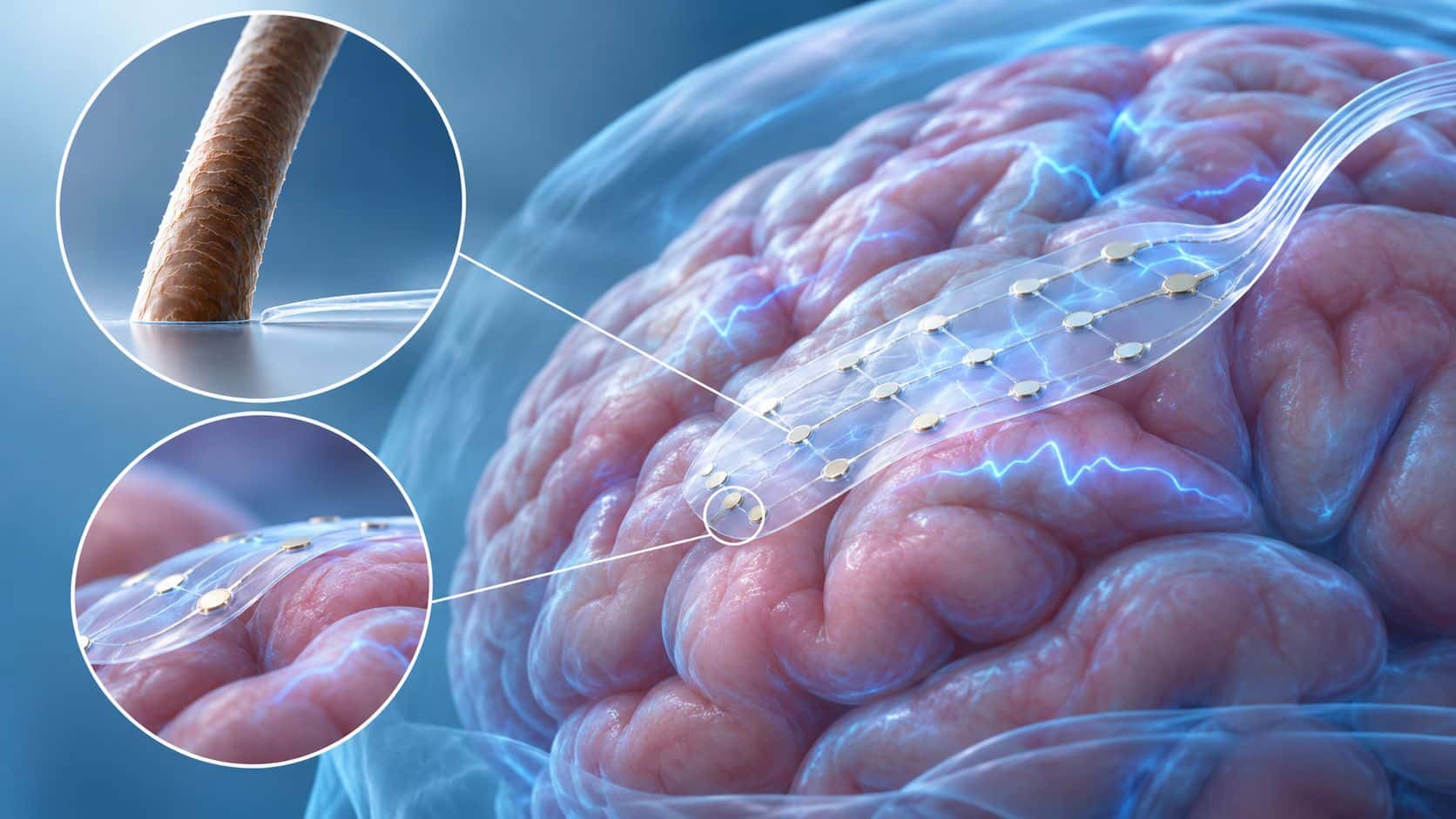
NeuroOne’s Evo Cortical electrodes measure approximately 0.08 millimeters thick, or 80 microns. According to the company, that’s about seven times thinner than conventional silicone electrodes.
They’re thinner than a typical human hair.
Their flexible design allows them to conform closely to the brain’s surface while recording the electrical signals physicians need.
The potential advantage isn’t simply having a smaller device. Reducing the amount of material placed against delicate tissue may provide physicians with additional options when planning neurological monitoring.
But NeuroOne’s technology also addresses another challenge: what happens after doctors identify the source of a problem.
When Diagnosis and Treatment Can Happen Together
For some patients with drug-resistant epilepsy, medication isn’t enough to control seizures. Physicians may recommend intracranial monitoring to locate the affected area of the brain.
Traditionally, identifying that area and treating it could involve separate procedures. Patients might undergo electrode implantation for monitoring and later require another operation to address the tissue responsible for their seizures.
NeuroOne’s FDA-cleared OneRF Brain Ablation System is designed to combine parts of that process.
Using compatible implanted electrodes, physicians can first record electrical activity and then deliver targeted radiofrequency energy to treat selected brain tissue. The system includes temperature monitoring to help control the treatment.
That means the electrode used to help identify the problem can also be used to perform the ablation.
For appropriately selected patients, both stages may be completed during a single hospitalization, potentially avoiding another surgical procedure.
This doesn’t make the treatment noninvasive. Electrodes still need to be implanted, and not everyone with epilepsy is a candidate. But avoiding an additional operation could reduce some of the disruption and physical demands associated with complex neurological care.
A Real-World Example From Cleveland
In 2024, physicians at University Hospitals in Cleveland used NeuroOne’s OneRF technology to treat a patient with complex epilepsy.
The medical team performed 44 targeted ablations over two days using electrodes that had already been implanted to monitor the patient’s brain activity.
Rather than taking the patient back to the operating room for those treatments, physicians performed the ablations at the bedside.
The case demonstrated how an instrument originally placed for diagnosis could also serve as a treatment device.
Physicians reported improvements in seizure frequency and aspects of the patient’s mood and memory, although continued follow-up was important.
One patient’s experience cannot establish how well a treatment will work for everyone. Still, the case provides a useful illustration of how multifunctional medical devices may change the way certain neurological procedures are performed.
For patients facing complicated treatment decisions, the possibility of avoiding another operation is worth understanding.
New Options for Severe Facial Pain
NeuroOne has also adapted its radiofrequency technology for trigeminal neuralgia, a condition that can cause sudden, severe facial pain.
The pain may be triggered by everyday activities such as chewing, talking, or brushing one’s teeth. For some people, the condition becomes so disruptive that even routine activities require careful planning.
When medication doesn’t provide adequate relief, physicians may consider procedures that target the affected nerve.
NeuroOne’s separately FDA-cleared OneRF Trigeminal Nerve Ablation System delivers controlled radiofrequency energy to selected nerve tissue. Its design allows physicians to map and treat different nerve distributions without repeatedly repositioning the probe.
In October 2026, NeuroOne announced findings from a peer-reviewed retrospective study involving 15 patients.
Fourteen experienced immediate freedom from pain, while the remaining patient became pain-free approximately one week later. At an average follow-up of six months, all 15 had favorable clinical outcomes, although some continued taking medication.
Those results are encouraging, particularly for a condition that can severely affect quality of life. However, the study was small, and larger investigations with longer follow-up will be necessary to determine how reliably the treatment works over time.
Could Future Devices Deliver Medicine Directly to the Brain?
Another challenge in neurological care involves getting medications to the precise areas of the brain where they’re needed.
The blood-brain barrier protects the brain from harmful substances, but it also prevents many medications from reaching their intended targets.
NeuroOne is investigating a technology called StereoCED, designed to deliver therapeutic agents directly into targeted brain tissue while also recording neurological electrical activity.
Researchers are exploring whether this approach could eventually support investigations involving brain tumors and other difficult-to-treat neurological conditions.
In October 2026, the company announced a pharmaceutical-industry research order involving StereoCED, with preclinical studies planned in collaboration with a major global pharmaceutical company.
StereoCED remains investigational. It has not demonstrated clinical effectiveness or received FDA clearance for commercial therapeutic use.
Although still at an early stage, the research illustrates how technologies developed for neurological monitoring may eventually support additional forms of treatment.
What These Advances Mean for Patients
Thinner electrodes and multifunctional medical devices are not cures for neurological disease. They also do not eliminate the risks associated with surgery or guarantee that every patient will experience a better outcome.
Their potential value is more practical.
An electrode that conforms closely to delicate tissue may provide additional monitoring options. A device that combines diagnosis and treatment may eliminate certain procedural steps. And emerging technologies could eventually help researchers deliver therapies more precisely.
For patients, the most important questions remain whether a treatment is appropriate, what clinical evidence supports it, and how its benefits and risks compare with available alternatives.
Those conversations belong with the medical specialists who understand each patient’s condition.
But the progress in neurological technology offers a reason for cautious optimism. Physicians are gaining new tools that may allow them to diagnose and treat certain conditions more efficiently, while researchers continue investigating additional applications.
For someone who has already spent years navigating seizures, severe pain, or repeated medical procedures, the possibility of a simpler treatment pathway can carry enormous significance.
And sometimes, that progress begins with something as small as an electrode thinner than a human hair.
Thinner Electrodes Could Mean Fewer Procedures for Neurological Patients
For someone living with a serious neurological condition, the prospect of another medical procedure can be exhausting. There may already have been years of testing, medications that haven’t worked, and difficult decisions about what comes next. Even when physicians know where a problem originates, treating it can involve additional surgery, specialized equipment, and another hospital stay.
New medical technology is beginning to change some of those possibilities, with advances that are surprisingly small in physical size but potentially significant in how care is delivered.
One example comes from NeuroOne Medical Technologies Corporation, a Minnesota-based medical-device company developing exceptionally thin electrodes and systems that allow physicians to perform certain diagnostic and therapeutic functions using the same implanted device.
For patients with difficult-to-treat epilepsy and other neurological conditions, the approach could mean fewer procedural steps and a more coordinated path from diagnosis to treatment.
Why Thinner Electrodes Matter
The brain communicates through electrical signals. When those signals become abnormal, as they can in epilepsy, physicians sometimes need to monitor activity directly from the brain to determine where seizures originate.
That process may involve placing electrodes on the brain’s surface or within specific areas of brain tissue. The electrodes collect electrical information that helps doctors understand what is happening and whether a targeted treatment might be appropriate.
Traditional cortical electrodes are commonly made using silicone-based materials. Although they have been used successfully for many years, their thickness and flexibility affect how they rest against delicate tissue.
NeuroOne’s Evo Cortical electrodes measure approximately 0.08 millimeters thick, or 80 microns. According to the company, that’s about seven times thinner than conventional silicone electrodes.
They’re thinner than a typical human hair.
Their flexible design allows them to conform closely to the brain’s surface while recording the electrical signals physicians need.
The potential advantage isn’t simply having a smaller device. Reducing the amount of material placed against delicate tissue may provide physicians with additional options when planning neurological monitoring.
But NeuroOne’s technology also addresses another challenge: what happens after doctors identify the source of a problem.
When Diagnosis and Treatment Can Happen Together
For some patients with drug-resistant epilepsy, medication isn’t enough to control seizures. Physicians may recommend intracranial monitoring to locate the affected area of the brain.
Traditionally, identifying that area and treating it could involve separate procedures. Patients might undergo electrode implantation for monitoring and later require another operation to address the tissue responsible for their seizures.
NeuroOne’s FDA-cleared OneRF Brain Ablation System is designed to combine parts of that process.
Using compatible implanted electrodes, physicians can first record electrical activity and then deliver targeted radiofrequency energy to treat selected brain tissue. The system includes temperature monitoring to help control the treatment.
That means the electrode used to help identify the problem can also be used to perform the ablation.
For appropriately selected patients, both stages may be completed during a single hospitalization, potentially avoiding another surgical procedure.
This doesn’t make the treatment noninvasive. Electrodes still need to be implanted, and not everyone with epilepsy is a candidate. But avoiding an additional operation could reduce some of the disruption and physical demands associated with complex neurological care.
A Real-World Example From Cleveland
In 2024, physicians at University Hospitals in Cleveland used NeuroOne’s OneRF technology to treat a patient with complex epilepsy.
The medical team performed 44 targeted ablations over two days using electrodes that had already been implanted to monitor the patient’s brain activity.
Rather than taking the patient back to the operating room for those treatments, physicians performed the ablations at the bedside.
The case demonstrated how an instrument originally placed for diagnosis could also serve as a treatment device.
Physicians reported improvements in seizure frequency and aspects of the patient’s mood and memory, although continued follow-up was important.
One patient’s experience cannot establish how well a treatment will work for everyone. Still, the case provides a useful illustration of how multifunctional medical devices may change the way certain neurological procedures are performed.
For patients facing complicated treatment decisions, the possibility of avoiding another operation is worth understanding.
New Options for Severe Facial Pain
NeuroOne has also adapted its radiofrequency technology for trigeminal neuralgia, a condition that can cause sudden, severe facial pain.
The pain may be triggered by everyday activities such as chewing, talking, or brushing one’s teeth. For some people, the condition becomes so disruptive that even routine activities require careful planning.
When medication doesn’t provide adequate relief, physicians may consider procedures that target the affected nerve.
NeuroOne’s separately FDA-cleared OneRF Trigeminal Nerve Ablation System delivers controlled radiofrequency energy to selected nerve tissue. Its design allows physicians to map and treat different nerve distributions without repeatedly repositioning the probe.
In October 2026, NeuroOne announced findings from a peer-reviewed retrospective study involving 15 patients.
Fourteen experienced immediate freedom from pain, while the remaining patient became pain-free approximately one week later. At an average follow-up of six months, all 15 had favorable clinical outcomes, although some continued taking medication.
Those results are encouraging, particularly for a condition that can severely affect quality of life. However, the study was small, and larger investigations with longer follow-up will be necessary to determine how reliably the treatment works over time.
Could Future Devices Deliver Medicine Directly to the Brain?
Another challenge in neurological care involves getting medications to the precise areas of the brain where they’re needed.
The blood-brain barrier protects the brain from harmful substances, but it also prevents many medications from reaching their intended targets.
NeuroOne is investigating a technology called StereoCED, designed to deliver therapeutic agents directly into targeted brain tissue while also recording neurological electrical activity.
Researchers are exploring whether this approach could eventually support investigations involving brain tumors and other difficult-to-treat neurological conditions.
In October 2026, the company announced a pharmaceutical-industry research order involving StereoCED, with preclinical studies planned in collaboration with a major global pharmaceutical company.
StereoCED remains investigational. It has not demonstrated clinical effectiveness or received FDA clearance for commercial therapeutic use.
Although still at an early stage, the research illustrates how technologies developed for neurological monitoring may eventually support additional forms of treatment.
What These Advances Mean for Patients
Thinner electrodes and multifunctional medical devices are not cures for neurological disease. They also do not eliminate the risks associated with surgery or guarantee that every patient will experience a better outcome.
Their potential value is more practical.
An electrode that conforms closely to delicate tissue may provide additional monitoring options. A device that combines diagnosis and treatment may eliminate certain procedural steps. And emerging technologies could eventually help researchers deliver therapies more precisely.
For patients, the most important questions remain whether a treatment is appropriate, what clinical evidence supports it, and how its benefits and risks compare with available alternatives.
Those conversations belong with the medical specialists who understand each patient’s condition.
But the progress in neurological technology offers a reason for cautious optimism. Physicians are gaining new tools that may allow them to diagnose and treat certain conditions more efficiently, while researchers continue investigating additional applications.
For someone who has already spent years navigating seizures, severe pain, or repeated medical procedures, the possibility of a simpler treatment pathway can carry enormous significance.
And sometimes, that progress begins with something as small as an electrode thinner than a human hair.
Sources and References: NeuroOne Medical Technologies Corporation, Evo Cortical Electrode technical specifications and product information (nmtc1.com); U.S. Food and Drug Administration, OneRF Ablation System clearance documentation; University Hospitals Cleveland Medical Center, 2024 clinical report involving bedside neurological ablation; NeuroOne 2024 Form 10-K; October 29, 2026, published clinical findings involving the OneRF Trigeminal Nerve Ablation System; October 22, 2026, StereoCED pharmaceutical research announcement; and company materials concerning neurological monitoring and investigational drug-delivery technology.
Image Sources: Original illustrations created using artificial intelligence to conceptually depict neurological monitoring, thin-film electrode technology, and targeted treatment capabilities associated with NeuroOne Medical Technologies Corporation (NASDAQ: NMTC). Images are for illustrative purposes only and are not exact representations of NeuroOne’s medical devices or clinical procedures.