



















Navigating a severe neurological disorder often brings physical and emotional exhaustion. Patients frequently face years of diagnostic testing, ineffective drug regimens, and difficult choices regarding future interventions. Even when clinicians successfully pinpoint the origin of a neurological issue, addressing it traditionally requires additional surgeries, specialized instrumentation, and extended hospital stays.
Emerging medical innovations are beginning to reshape these treatment pathways, introducing devices that are exceptionally compact in physical size yet substantial in their clinical utility.
One notable example is NeuroOne Medical Technologies Corporation, a medical device developer focused on engineering ultra-thin electrodes and comprehensive systems that enable physicians to execute both diagnostic and therapeutic procedures using a single implanted tool.
For individuals managing treatment-resistant epilepsy and related neurological disorders, this integrated strategy can streamline procedural requirements and foster a more seamless transition from initial diagnosis to targeted treatment.
The Clinical Significance of Ultra-Thin Electrodes
The human brain relies on electrical impulses for internal communication. When these signals malfunction, as occurs in epilepsy, clinicians frequently need to monitor electrical patterns directly from the brain tissue to isolate the precise source of seizure activity.
This monitoring process generally entails positioning electrodes either across the surface of the brain or directly within specific regions of neural tissue. These sensors capture electrical data, empowering medical teams to evaluate underlying conditions and determine whether localized interventions are appropriate.
Standard cortical electrodes are typically constructed from silicone materials. While reliable over decades of clinical use, their relative rigidity and thickness influence how they interface with fragile neural structures.
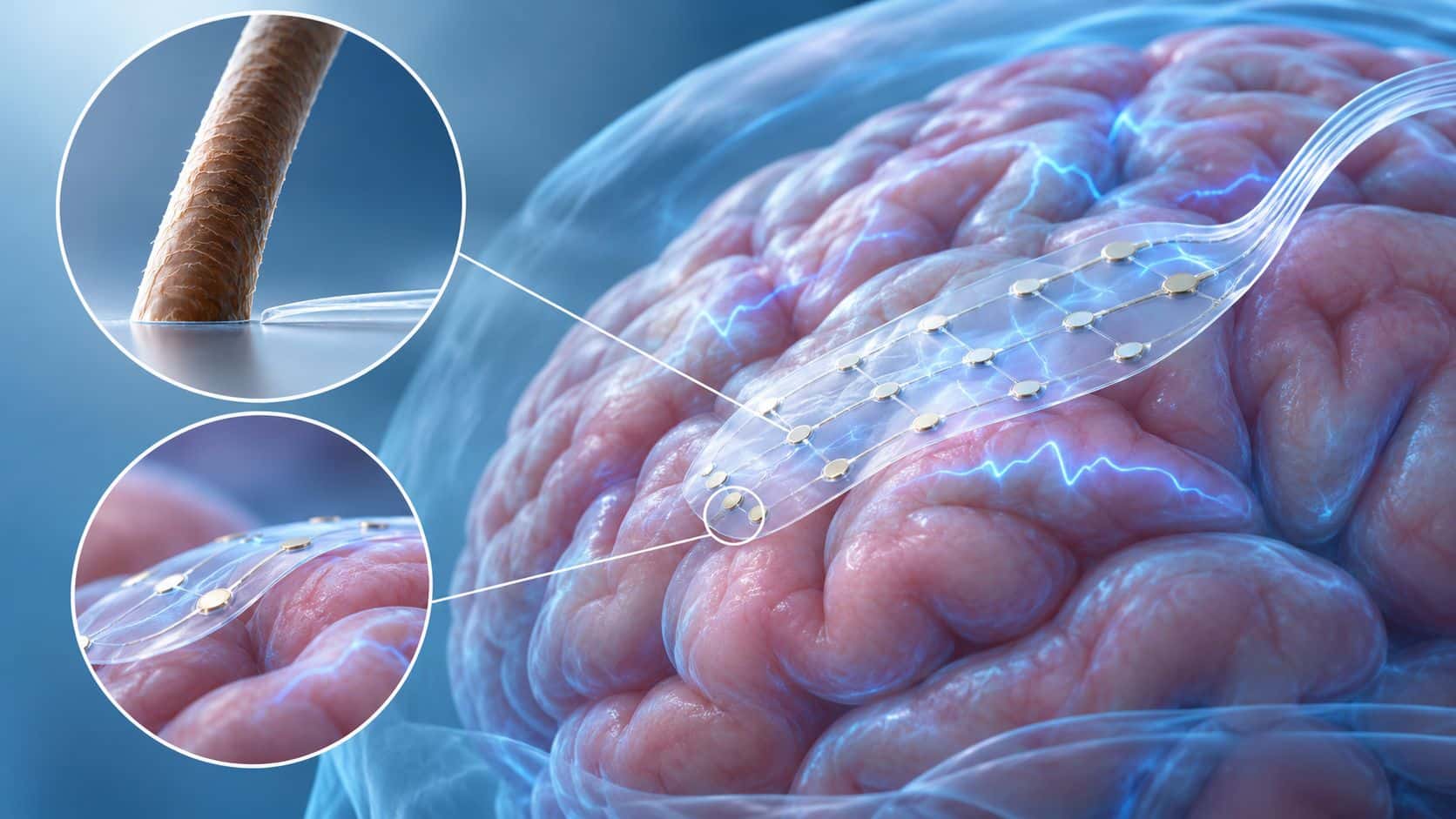
NeuroOne’s Evo Cortical electrodes measure roughly 0.08 millimeters—or 80 microns—in thickness. According to manufacturer specifications, this profile is approximately seven times thinner than standard silicone alternatives.
To put that dimension into perspective, these electrodes are thinner than a human hair.
Their flexible engineering allows them to conform closely to the complex contours of the brain while accurately recording essential electrical signals.
The primary clinical benefit extends beyond mere miniaturization. Minimizing the physical mass resting against delicate tissue grants clinicians enhanced flexibility when designing comprehensive neurological monitoring plans.
Importantly, NeuroOne’s technology also addresses the subsequent phase of care: executing targeted treatments once the origin of the neurological disturbance is identified.
Streamlining Diagnosis and Treatment in a Single Phase
For patients dealing with drug-resistant epilepsy, pharmaceutical treatments frequently fail to achieve adequate seizure control. In such cases, physicians may recommend intracranial monitoring to locate the problematic brain region.
Historically, locating and treating this abnormal tissue necessitated separate medical procedures. Patients would undergo an initial surgery to implant monitoring electrodes and, at a later date, require a completely separate operation to treat the identified brain tissue.
NeuroOne’s FDA-cleared OneRF Brain Ablation System is engineered to unify these distinct phases.
Utilizing compatible implanted electrodes, clinicians can initially record electrical rhythms and subsequently deliver controlled radiofrequency energy to treat selected areas of the brain. The system incorporates integrated temperature monitoring to maintain precision throughout the therapeutic delivery.
Consequently, the exact electrode employed to diagnose the underlying issue can also be utilized to perform the tissue ablation.
For carefully selected patients, both procedural stages can be consolidated into a single hospital admission, effectively eliminating the need for an additional surgical intervention.
It is important to note that this approach remains invasive—electrodes must still be surgically implanted, and not every epilepsy patient qualifies as a candidate. Nonetheless, circumventing a secondary operation helps mitigate the physical demands and disruption inherent in complex neurological care.
A Clinical Case Study From Cleveland
During 2024, medical specialists at University Hospitals in Cleveland utilized NeuroOne’s OneRF technology to care for a patient suffering from complex epilepsy.
The clinical care team successfully executed 44 targeted ablations across a two-day span, utilizing electrodes that had already been placed to monitor the patient’s neural activity.
Rather than transferring the patient back to the operating suite for these therapeutic applications, clinicians performed the ablations directly at the patient’s bedside.
This clinical encounter highlighted how instrumentation originally introduced for diagnostic mapping can successfully double as a therapeutic instrument.
Attending physicians documented positive reductions in seizure frequency alongside improvements in certain aspects of the patient’s memory and mood, though ongoing clinical follow-up remained essential.
While an isolated case study cannot guarantee uniform results across the broader patient population, it offers a clear demonstration of how multifunctional medical devices can transform the execution of specific neurological interventions.
For individuals facing complex therapeutic choices, understanding the potential to avoid subsequent surgical procedures is an important consideration.
Advanced Approaches for Severe Facial Pain
NeuroOne has also adapted its foundational radiofrequency technology to address trigeminal neuralgia, a debilitating condition characterized by sudden, intense episodes of facial pain.
Even routine daily actions such as speaking, eating, or brushing one’s teeth can provoke agonizing discomfort, often forcing individuals to meticulously plan everyday activities around their symptoms.
When pharmacological treatments fail to deliver sufficient relief, physicians often explore procedures directed at the impacted nerve pathways.
NeuroOne’s separately FDA-cleared OneRF Trigeminal Nerve Ablation System applies regulated radiofrequency energy to targeted nerve structures. Its architecture allows clinicians to map and treat distinct nerve distributions efficiently without repeatedly withdrawing and repositioning the probe.
In October 2026, NeuroOne published data from a peer-reviewed retrospective analysis encompassing 15 patients.
Fourteen participants reported immediate relief from pain, while the remaining individual achieved a pain-free status approximately one week post-procedure. At an average six-month follow-up evaluation, all 15 patients maintained positive clinical outcomes, though some continued concurrent pharmacological therapy.
While these outcomes are encouraging—especially given the profound impact trigeminal neuralgia exerts on quality of life—the study cohort was modest in size. Larger, long-term clinical trials will be necessary to establish the sustained reliability of this treatment over extended periods.
Exploring Targeted Intracerebral Drug Delivery
An ongoing hurdle in neurology involves transporting therapeutic compounds directly to precise regions of the brain where they are most required.
While the blood-brain barrier is vital for protecting the central nervous system from circulating toxins, it simultaneously obstructs many pharmaceutical agents from reaching their intended targets.
To address this obstacle, NeuroOne is actively researching an investigational technology termed StereoCED. This system is designed to infuse therapeutic agents directly into localized brain tissue while simultaneously recording neural electrical activity.
Researchers are currently investigating whether this dual-function approach could eventually aid in the study of brain tumors and other highly refractory neurological conditions.
In October 2026, the company disclosed a pharmaceutical research agreement centered on StereoCED, outlining preclinical investigations scheduled in partnership with a major international pharmaceutical enterprise.
At present, StereoCED remains strictly investigational. It has neither established clinical efficacy nor secured FDA clearance for commercial therapeutic applications.
Although this initiative remains in early development, it exemplifies how innovations born from diagnostic neural monitoring may eventually expand the horizons of medical treatment.
Summary
Ultra-thin electrodes and multifunctional neurological devices do not constitute a cure for complex brain disorders, nor do they eliminate the inherent risks of neurosurgery. However, by condensing diagnostic and therapeutic phases into more streamlined procedures, these innovations represent meaningful progress in reducing the physical and procedural burdens associated with advanced neurological care.
Their potential value is more practical.
An electrode that conforms closely to delicate tissue may provide additional monitoring options. A device that combines diagnosis and treatment may eliminate certain procedural steps. And emerging technologies could eventually help researchers deliver therapies more precisely.
For patients, the most important questions remain whether a treatment is appropriate, what clinical evidence supports it, and how its benefits and risks compare with available alternatives.
Those conversations belong with the medical specialists who understand each patient’s condition.
But the progress in neurological technology offers a reason for cautious optimism. Physicians are gaining new tools that may allow them to diagnose and treat certain conditions more efficiently, while researchers continue investigating additional applications.
For someone who has already spent years navigating seizures, severe pain, or repeated medical procedures, the possibility of a simpler treatment pathway can carry enormous significance.
And sometimes, that progress begins with something as small as an electrode thinner than a human hair.
How Ultra-Thin Electrodes Are Transforming Neurological Care
For individuals managing complex neurological disorders, facing another medical intervention can feel deeply draining. Years of diagnostic testing, ineffective pharmacological treatments, and difficult medical choices often take a heavy toll. Even when clinicians successfully pinpoint the origin of a neurological issue, addressing it traditionally requires additional surgeries, specialized hardware, and extended hospital stays.
Fortunately, modern medical engineering is beginning to shift these realities, introducing innovations that are remarkably miniaturized yet carry substantial potential for improving patient care pathways.
A prime example of this innovation comes from NeuroOne Medical Technologies Corporation, a medical device manufacturer based in Minnesota that specializes in engineering exceptionally thin electrodes and integrated systems. These tools enable clinicians to execute both diagnostic monitoring and therapeutic interventions utilizing a single implanted medical device.
For individuals struggling with refractory epilepsy and other neurological disorders, this integrated design can streamline procedural steps, creating a more unified journey from initial diagnosis to targeted treatment.
The Clinical Significance of Sub-Millimeter Electrodes
The human brain relies on complex electrical signaling to function. When these pathways misfire—as frequently occurs in epilepsy—clinicians sometimes need to record electrical activity directly from intracranial structures to isolate the exact origin of seizure activity.
This diagnostic procedure typically involves positioning specialized electrodes either directly onto the cerebral cortex or deep within specific neural regions. These sensors capture electrical data, empowering medical teams to evaluate brain function and determine whether a localized intervention is warranted.
Standard cortical electrodes are generally manufactured using silicone substrates. While these conventional tools have served clinical practice effectively for decades, their inherent thickness and rigidity influence how comfortably they rest against fragile neural matter.
NeuroOne’s Evo Cortical electrodes feature a profile of approximately 0.08 millimeters, or 80 microns. According to manufacturing specifications, this profile is roughly seven times thinner than standard silicone-based alternatives.
To put that into perspective, they are thinner than an average human hair.
This high degree of flexibility allows the sensors to adapt closely to the contours of the brain while accurately recording necessary bioelectric signals.
The primary benefit extends beyond mere miniaturization. Minimizing the physical mass resting against sensitive tissue gives physicians enhanced versatility when designing comprehensive neurological monitoring protocols.
Furthermore, NeuroOne’s technology tackles a subsequent clinical hurdle: executing treatment immediately after locating the source of neural dysfunction.
Streamlining Diagnosis and Treatment into a Unified Process
For patients living with medication-resistant epilepsy, standard pharmacological therapies often fail to achieve seizure control. In such cases, medical professionals may advise intracranial monitoring to map the dysfunctional brain region.
Historically, isolating and treating the seizure focus required distinct, separate interventions. Patients would undergo an initial surgery for electrode placement, followed by a subsequent operation at a later date to treat the affected neural tissue.
The FDA-cleared OneRF Brain Ablation System from NeuroOne is engineered to consolidate these separate phases.
By utilizing compatible implanted electrodes, clinicians can first capture diagnostic electrical activity and subsequently deliver controlled radiofrequency energy to treat designated brain tissue. The apparatus incorporates integrated thermal monitoring to maintain precision throughout the therapeutic phase.
Consequently, the exact electrode deployed to map the neurological anomaly can also be employed to execute the targeted ablation.
For carefully evaluated candidates, both stages can be accomplished during a single hospital admission, successfully avoiding an extra surgical procedure.
It is important to note that this methodology does not render the procedure noninvasive; electrodes must still be surgically implanted, and not all epilepsy patients qualify as candidates. Nevertheless, bypassing a secondary operation can significantly minimize the physical strain and disruption tied to advanced neurological management.
Clinical Implementation in Cleveland Medical Centers
During 2024, surgical teams at University Hospitals in Cleveland utilized NeuroOne’s OneRF technology to manage care for a patient suffering from complex epilepsy.
The clinical staff successfully executed 44 targeted ablations across a two-day span, utilizing electrodes that were already positioned to monitor the individual’s cerebral activity.
Rather than transferring the patient back to the operating suite for these therapeutic applications, clinicians performed the ablations directly at the bedside.
This clinical event highlighted how diagnostic instrumentation can double as an active therapeutic tool.
While ongoing clinical follow-up remains essential, medical staff observed favorable shifts in seizure frequency alongside improvements in aspects of the patient’s mood and cognitive memory.
While a single clinical case cannot guarantee universal outcomes for all patients, it offers a clear example of how multifunctional medical hardware is reshaping specialized neurological workflows.
For individuals confronting intricate medical choices, the prospect of bypassing an extra surgical intervention represents a meaningful advancement.
Advanced Therapeutic Solutions for Trigeminal Neuralgia
NeuroOne has also re-engineered its radiofrequency technology to address trigeminal neuralgia, a neurological disorder characterized by sudden, excruciating facial pain.
Simple daily activities such as speaking, eating, or brushing one’s teeth can trigger these intense episodes. For many affected individuals, the condition becomes so debilitating that routine daily life demands meticulous planning.
When pharmacological options fail to deliver sufficient relief, clinicians frequently evaluate interventions designed to target the injured nerve directly.
NeuroOne’s separately FDA-cleared OneRF Trigeminal Nerve Ablation System administers regulated radiofrequency energy to specific neural pathways. Its architectural design enables physicians to map and treat varying nerve distributions without requiring continuous repositioning of the probe.
In October 2026, the company published data stemming from a peer-reviewed retrospective analysis involving 15 patients.
Out of this cohort, 14 individuals experienced immediate pain relief, while the remaining patient achieved a pain-free status roughly one week post-procedure. At an average six-month follow-up evaluation, all 15 participants demonstrated positive clinical outcomes, although certain individuals maintained some level of medication usage.
These findings offer encouraging promise for managing a condition notoriously detrimental to overall quality of life. Even so, because the evaluation involved a limited cohort, larger-scale studies featuring extended follow-up timelines remain necessary to confirm long-term efficacy.
Exploring Future Possibilities in Precision Drug Delivery
A persistent obstacle within neurological medicine involves transporting pharmacological agents directly to specific cerebral regions requiring intervention.
While the blood-brain barrier serves a vital protective role by shielding the central nervous system from circulating toxins, it simultaneously blocks the transit of numerous therapeutic medications.
Ultimately, navigating these complex biological barriers and refining minimally disruptive interventions will require continued clinical research, careful patient selection, and rigorous scientific validation to ensure that technological innovations reliably translate into meaningful, long-term health benefits.
Exploring the Evolution of Neurotechnology
Recent engineering achievements in the medical device sector are steadily refining how specialists monitor and interact with brain tissue. Historically, equipment used for recording neurological signals or delivering interventions was relatively bulky, which often limited precision during delicate procedures. Today, advanced manufacturing techniques are allowing engineers to construct exceptionally thin-film electrodes.
These ultra-slim components are designed to adapt more naturally to the complex contours of the brain, potentially reducing the disruption of surrounding anatomy during placement. This progression in hardware design aims to improve the fidelity of neural signal recording while minimizing the physical footprint of the implanted components inside the cranium.
Advancing Targeted Treatment Delivery Systems
Beyond simply monitoring electrical activity, medical device developers are actively looking into ways to combine diagnostic functions with therapeutic delivery. Certain physiological barriers in the central nervous system can often prevent traditional medications from reaching their intended targets effectively.
To address this challenge, companies like NeuroOne are investigating specialized technology known as StereoCED. This platform is engineered to infuse therapeutic agents directly into specific regions of brain tissue while simultaneously recording neurological electrical activity.
Researchers are currently evaluating whether this dual-purpose approach could eventually aid investigations concerning brain tumors and other complex neurological conditions. In October 2026, the organization disclosed a pharmaceutical-industry research order for StereoCED, paving the way for upcoming preclinical evaluations alongside a major global pharmaceutical partner.
It is important to note that StereoCED remains strictly investigational. The technology has not yet proven its clinical effectiveness, nor has it obtained regulatory clearance from the U.S. Food and Drug Administration for commercial therapeutic applications. Nevertheless, these early-stage initiatives highlight how tools originally engineered for monitoring electrical signals may eventually expand into supportive treatment roles.
What These Innovations Signify for Patients
While the emergence of multifunctional medical devices and micro-thin electrodes represents notable engineering progress, these developments are not cures for neurological diseases. They do not remove the inherent risks associated with neurosurgery, nor do they guarantee superior clinical outcomes for every individual.
Instead, the true value of these advancements lies in practical improvements to clinical workflows. An electrode that rests gently against sensitive tissue can expand monitoring capabilities, whereas a device capable of handling both diagnosis and treatment may streamline specific procedural steps. Ultimately, these evolving tools aim to help medical researchers deliver therapies with greater spatial accuracy.
For patients, key considerations should always center on whether a given intervention is medically appropriate, what robust clinical data supports its use, and how the potential benefits weigh against known risks and standard alternatives. These critical evaluations are best discussed directly with qualified healthcare specialists who thoroughly understand a patient’s unique medical history.
Even so, ongoing advancements in neurotechnology provide a foundation for realistic optimism. Physicians continue to acquire sophisticated instruments designed to diagnose and manage complex conditions with heightened efficiency, while researchers push forward with preclinical and clinical investigations. For individuals who have lived through years of managing chronic pain, seizures, or frequent clinical interventions, the prospect of more streamlined care pathways holds profound importance. Ultimately, this ongoing medical evolution often begins with micro-scale engineering innovations, such as an electrode measuring thinner than a human hair.