



















The fitness bikini competitor and bodybuilding judge explains why technique, consistency and a balanced diet matter more to her than obsessing over the number on the scale.
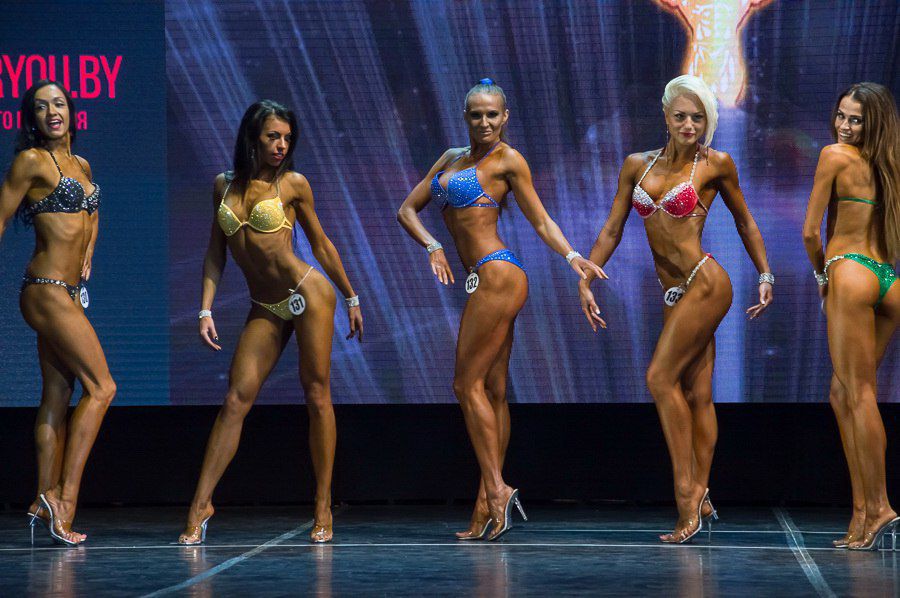
Bodybuilding judge and medalist Katsiaryna (Katya) Zakamornaya has competed at prestigious events and later taken on the role of evaluating athletes onstage. Her fitness philosophy is focused on building a strong physique that can be maintained long term.
“I see discipline defeating talent every day,” she said. “That applies to both nutrition and physical activity.”
Her approach combines regular training, technical precision and a flexible approach to nutrition. And one of the first things she wants people to stop doing is treating carbohydrates as the enemy.
Why Zakamornaya doesn’t cut out carbs
In the pursuit of a leaner physique, many athletes and recreational lifters dramatically restrict carbohydrates. Zakamornaya has seen what she describes as the downside of that approach.
“People can experience brain fog, irritability, a loss of motivation and a plateau they can’t seem to break through,” she said.
Rather than eliminating carbohydrates altogether, Zakamornaya focuses on choosing nutrient-dense sources and maintaining a balanced diet.
“Carbohydrates are a tool, not a curse,” she said. “The problem is not carbohydrates themselves. It is the quality and source.”
Her preferred approach includes complex carbohydrates from foods such as vegetables, sweet potatoes, berries and other minimally processed sources. She also emphasizes protein, healthy fats, fiber and adequate hydration.
The goal, she said, is not to fear food or constantly restrict it.
“My professional advice is simple: Stop being afraid of food,” Zakamornaya said.
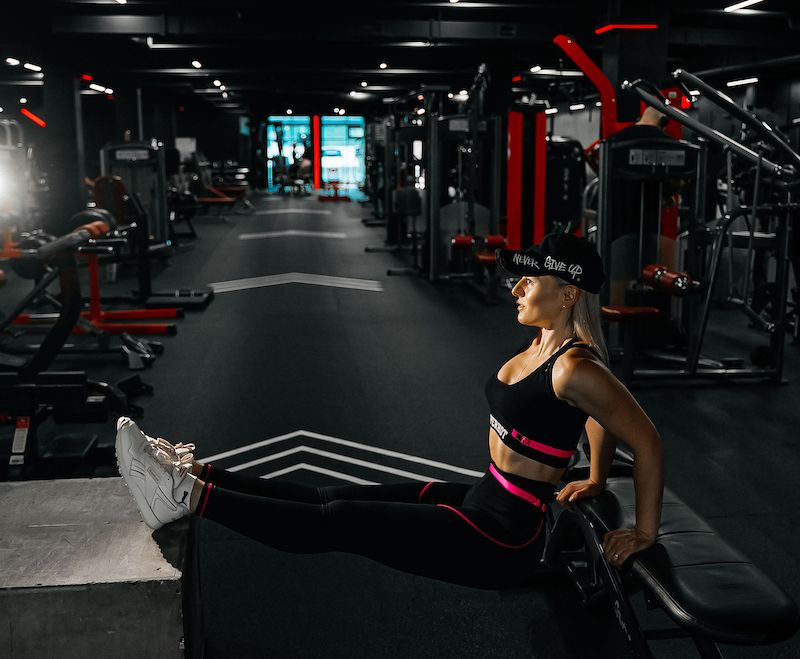
Forget the scale. Look at the bigger picture.
Another principle of Zakamornaya’s coaching philosophy is to avoid becoming overly dependent on the number displayed by a scale.
“I fundamentally remove scales from the daily routine of my clients,” she said.
Body weight can fluctuate for many reasons, she noted, including hydration and other normal physiological changes. Instead, she encourages people to pay attention to body composition, proportions, performance and how they feel.
“The mirror reflects composition and proportions, while the scale only reflects gravitational mass,” she said.
Zakamornaya also believes realistic expectations are essential, particularly for women.
“You are not a static machine,” she said. “The body changes.”
Instead of expecting the same appearance every day of the year, she encourages clients to take a longer view of progress.
Her goal is not to make someone resemble an arbitrary social media ideal. It is to help them understand their individual structure and build a training program around their goals and proportions.
What she does when progress stalls
A training or weight-loss plateau can send people into panic mode. The typical response, Zakamornaya said, is to cut even more calories.
That is not automatically her solution.
“When the body adapts, many people immediately decide they need to eat less,” she said. “But sometimes the answer is to maintain the result or change the training stimulus.”
That could mean adjusting the training program rather than simply adding more cardio or cutting more food.
Zakamornaya favors a gradual, sustainable approach over aggressive restriction. For clients with significant weight to lose or underlying health concerns, she also recommends seeking guidance from qualified medical professionals.
“I do not advise people to begin training with an extreme deficit of fats and carbohydrates,” she said.
Start with movement, not punishment
Zakamornaya also pushes back against the idea that fitness has to begin with punishing workouts.
“Sport does not have to mean immediate pain and exhaustion,” she said.
For beginners, she prefers starting with manageable activity, including walking and short cardio sessions, before gradually increasing training demands.
Consistency matters more than trying to destroy yourself during a single workout.
Even a short daily session can become part of a larger routine, she said. The important thing is to build a system that someone can realistically maintain.
That same philosophy carries over into resistance training.
Her biggest training rule: Technique before intensity
A complicated workout program means little if the exercises are performed poorly, according to Zakamornaya.
“The most advanced training program can become useless if you perform the exercises incorrectly,” she said.
For her, good technique involves controlling the movement, using an appropriate range of motion and understanding which muscles are being trained.
She also emphasizes the mind-muscle connection.
“It is the ability to consciously feel how the muscle you want to train is working,” she said.
That awareness can help lifters focus on the intended movement rather than simply rushing through repetitions.
Zakamornaya said training should be viewed as a combination of several interconnected elements: a structured program, proper technique, attention to muscle engagement and adequate nutrition.
“Without any one of these elements, you risk getting an average result while wasting a lot of time and effort,” she said.
Building an X-frame instead of chasing a smaller number
When clients ask how to create a smaller-looking waist, Zakamornaya starts with a reality check.
“You cannot change every aspect of your structure,” she said.
Instead, she focuses on what can be developed through training. Building the back, shoulders and lower body can help create the visual proportions associated with an X-shaped physique.
The goal is not necessarily to chase the lowest possible body weight.
It is to create balance.
That mindset reflects her broader approach to fitness: Stop trying to force your body into someone else’s template and instead focus on improving your own performance, proportions and capabilities.
Her approach to nutrition is flexible
Zakamornaya describes her nutrition philosophy as flexible rather than restrictive.
She does not believe in demonizing individual foods. Instead, she encourages clients to understand the role of protein, fats and carbohydrates within their overall diet.
Her nutritional priorities include:
- Adequate hydration.
- Protein-rich foods.
- Sources of unsaturated fats, including omega-3 fatty acids.
- Complex carbohydrates.
- Fiber.
- A diet that can be maintained consistently.
She views sports nutrition and supplements as tools rather than shortcuts.
“There is no magic pill,” she said.
For experienced athletes, supplements may be useful for convenience or to help meet nutritional needs. But Zakamornaya does not believe beginners need to build their entire fitness strategy around powders and supplements.
The foundation, she said, should remain training, nutrition and consistency.
Fitness as a long-term practice
After years of competing, judging and coaching, Zakamornaya’s message is ultimately less about achieving a perfect physique than building a sustainable relationship with training.
She wants people to measure progress not only by their appearance, but by what their bodies can do.
“You become stronger, healthier and more resilient with every training cycle,” she said.
That, she believes, is what transforms fitness from an obligation into a lifestyle.
“Your goal should not simply be to burn off what you ate,” Zakamornaya said. “Create a system that works for you.”
For Zakamornaya, the formula is straightforward: train consistently. Learn proper technique. Eat enough to support your goals. And stop expecting one workout, one diet or one number on the scale to define your progress.
Fitness, she said, works best when discipline becomes something you can live with.