


















The optimal amount of protein for muscle growth remains one of the most contentious subjects in the fitness community. If you have spent any time researching nutrition for strength training, you have likely encountered the standard recommendation: consume 1 to 1.5 grams of protein per pound of body weight. For those focused on competitive bodybuilding, that figure often climbs even higher.
This guideline has been repeated so frequently across gyms and fitness forums that it is now widely accepted as an absolute truth. However, the scientific evidence supporting such a high, blanket requirement is often overlooked or misunderstood. In reality, this “rule” is more of a cultural legacy than a biological requirement.
Evaluating the Scientific Basis of the One-Gram-Per-Pound Protein Guideline
The classic recommendation of one gram of protein per pound of body weight did not originate from a definitive clinical trial. Instead, it emerged from decades of anecdotal evidence, coaching traditions, and the “more is better” philosophy common in bodybuilding culture. While it serves as an easy-to-remember rule of thumb, it functions more as a broad estimate than a precise scientific calculation.
Distinguishing Between Total Body Weight and Lean Body Mass for Protein Needs
A significant flaw in common protein calculations is the failure to distinguish between total body weight and lean body mass. From a physiological standpoint, protein requirements are primarily driven by lean tissue, not body fat. For example, a 250-pound athlete with very low body fat has vastly different nutritional requirements than a sedentary individual of the same weight with a high body fat percentage. Adipose tissue (fat) does not require the same protein intake for maintenance as muscle tissue does.
For the general, sedentary population, the Recommended Dietary Allowance (RDA) is set at approximately 0.36 grams per pound (0.8 grams per kilogram) of body weight. This level is intended to prevent deficiency and support basic health, not to facilitate muscle hypertrophy. While resistance training does increase protein needs, the jump is not as extreme as many believe.
Extensive research suggests that for most people engaged in strength training, consuming between 0.7 and 1.0 grams of protein per pound of lean body mass—not total weight—is sufficient to maximize muscle protein synthesis. Consuming protein beyond this range typically results in diminishing returns; your body will not automatically create more muscle tissue simply because you increased your intake of poultry or whey.
Biological Limits and the Role of Essential Amino Acids in Hypertrophy
Muscle growth is not a process that can be forced through nutrition alone. It is a biological adaptation limited by training intensity, recovery time, hormonal profiles, and genetics. Protein provides the necessary building blocks, but it does not create the demand for growth. Without a sufficiently intense training stimulus to force the body to adapt, extra protein is simply processed for other metabolic needs.
When protein intake exceeds what the body requires for repair and growth, the excess amino acids are not “wasted,” but they are diverted. The body can oxidize them for energy or convert them into glucose via gluconeogenesis. However, the body will not continue to build muscle tissue indefinitely just because there is a surplus of amino acids.
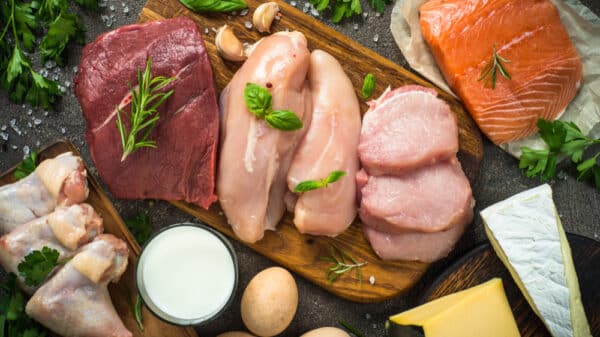
The quality of the protein also plays a vital role. Essential amino acids must be obtained through the diet because the body cannot produce them. Animal-based proteins are “complete,” meaning they contain all essential amino acids in a highly bioavailable form. While plant-based proteins can be combined to create a complete profile, this is often less calorically efficient. For instance, obtaining a complete amino acid profile from plant sources like rice and beans may require significantly more calories than obtaining the same amount of protein from a lean animal source like tuna.
The Synergistic Role of Carbohydrates in Muscle Maintenance and Energy
Carbohydrates are often viewed as secondary to protein, but they are critical for muscle preservation. When the body has adequate glycogen stores and sufficient total calories, it is less likely to break down muscle tissue for fuel. This “protein-sparing” effect allows more of the protein you consume to be utilized for its primary purpose: repairing and building tissue. Rather than being competitors, protein and carbohydrates work together to support an anabolic environment.
Summary of Effective Protein Strategies for Lifters
The most effective approach to protein intake for those training hard is to target 0.7 to 1.0 grams per pound of lean body mass. While many lifters focus solely on increasing protein, muscle growth is more often limited by insufficient training intensity or inadequate recovery. Simply adding more protein to a plateaued routine is rarely the solution. Lasting progress is driven by a balanced combination of a calculated training stimulus, sufficient caloric intake to fuel performance, and the necessary amino acids to facilitate repair. Protein is an essential material, but the actual construction of muscle only happens when the work is done in the gym.