
















When it comes to fitness, one important principle stands true: the quality of your nutrition significantly influences your performance. To harness the full potential of your body during exercise and recovery, prioritizing pure, high-quality nutrition is more than just a choice; it is a biological necessity.
A standout antioxidant known as astaxanthin (pronounced as-tuh-ZAN-thin) has gained considerable attention recently. If you are unfamiliar with it, now is the time to take notice, as this compound can play a crucial role in enhancing your recovery and aligning with your fitness goals.
AstaReal, part of Fuji Chemical Industries, has established itself as a leading authority on astaxanthin. According to Scientific Communications Specialist Susan Hamrahi, ND, the brand’s credibility is closely linked to its scientific foundation.
“We have a state-of-the-art facility located just outside Stockholm, Sweden, where we initiated our significant research into this powerful antioxidant,” Hamrahi shared.
What is Astaxanthin?
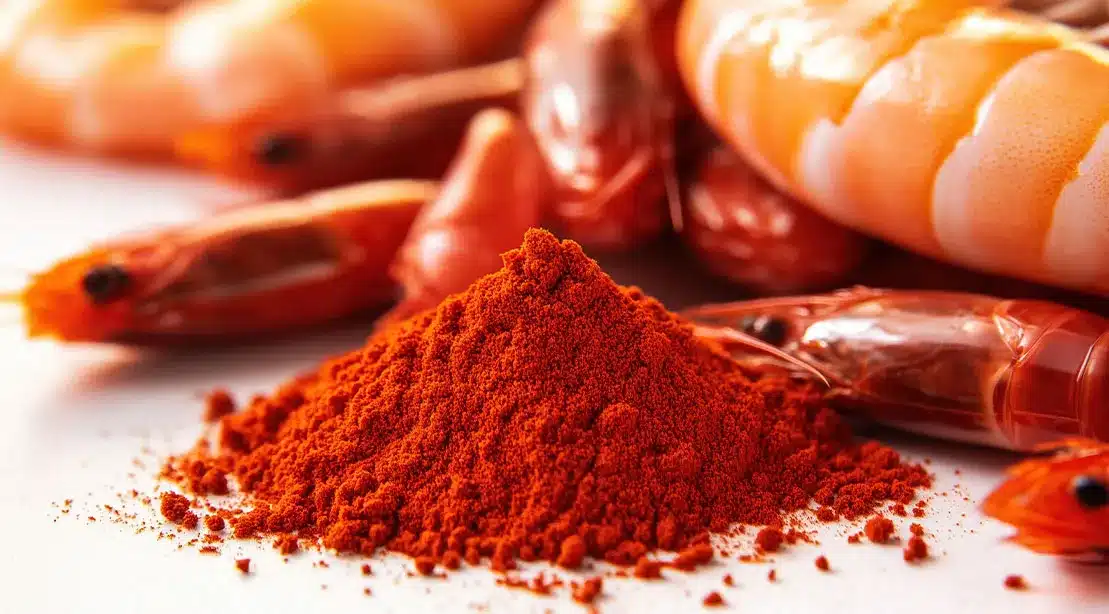
Astaxanthin is a vivid red pigment primarily sourced from microalgae, which is responsible for the coloration in salmon, shrimp, and even flamingos. While it serves as a potent antioxidant, its mechanism differs significantly from other antioxidants. Most antioxidants operate either inside or outside cell membranes; astaxanthin, however, spans the entire membrane due to its elongated molecular structure, functioning like a protective bridge.
The vibrant red hue of astaxanthin arises from its unique molecular composition, which features a long chain of conjugated double bonds. This structure allows it to efficiently absorb high-energy blue and ultraviolet light. In nature, microalgae produce astaxanthin as a natural sun shield, transforming from green to red to safeguard their DNA against severe environmental stressors and oxidative damage.
This research began with Åke Lignell, who investigated how salmon manage to undertake extensive 1,000-mile migrations, leading to the discovery that astaxanthin plays a vital role in protecting their muscle tissue during exertion. Hamrahi noted that this sparked additional research into the compound’s potential benefits for humans.
“Our focus has been on understanding how this nutrient can enhance human health and performance and how we can continue to innovate,” she explained.
Further studies have shown that astaxanthin may offer numerous benefits for people, particularly in recovery. It has been linked to improved cognitive functions, enhanced skin and eye health, cardiovascular support, joint health, and even reduced lactic acid accumulation.
According to Karen Hecht, Vice President of Science at AstaReal, these findings indicate that astaxanthin might hold even more benefits, particularly for endurance athletes. “Astaxanthin directly impacts mitochondria, the energy-producing powerhouse of cells, which is crucial for endurance athletes who rely heavily on mitochondrial function,” she stated.
Hecht also mentioned research indicating that older adults who engage in more strenuous activities can experience physical gains, such as muscle growth in the lower legs, when astaxanthin is combined with Vitamin E and zinc. This research emphasizes that participants not only improved their performance but also saw tangible muscle increases.
An Ally For Traveling
Jackie Kaminski, also known as “The Fight Nutritionist,” first discovered astaxanthin at a conference, where she was captivated by Hecht’s compelling research.
“The practical implications of the research for various athletes really struck me,” Kaminski noted.
Working with athletes who frequently travel for competitions, Kaminski understands that varying climates can increase vulnerability to illness and health issues, potentially impacting performance. She recommends incorporating astaxanthin into their immunity-enhancing regimens.
“It acts as a kind of insurance policy,” she explained. “While you might not feel its effects immediately, consistent use over time shows benefits similar to taking protein powders or Vitamin C; both are beneficial even when their effects aren’t immediately noticeable.”
Astaxanthin enhances cellular function, which is particularly valuable for older adults. As a fat-soluble nutrient, it remains in the body’s tissues longer compared to the water-soluble Vitamin C, making it a reliable form of protection during travel when nutritional consistency can be compromised.
Kaminski echoed Hecht’s observations regarding the muscle-building properties associated with astaxanthin, identifying further reasons to advocate for its use.
“We’re observing that astaxanthin seems to enable older individuals to continue exercising efficiently, thereby enhancing their responses to physical activity due to improved cellular function,” she asserted.

Dosages and Sources
Experts including Hecht and Hamrahi recommend a standard daily dosage of astaxanthin for healthy adults ranging from 4 to 12 milligrams. Some research suggests varying amounts from 2 up to 24 milligrams daily. Hamrahi pointed out that achieving these recommended dosages solely from food intake would be extraordinarily difficult.
“To get 12 milligrams a day through diet alone, you would need to consume 254 pounds of food each year,” she stated.
Supplementation is a practical solution, making AstaReal a well-regarded source. Hecht affirmed that most studies on astaxanthin focus on AstaReal because of their meticulous production process.
“Our cultivation methods are inspired by our pharmaceutical parent company, ensuring the highest quality standards,” Hecht emphasized. “AstaReal astaxanthin is the most researched natural variant derived from algae.”
The only reported side effect involves the pigment possibly altering the color of stool, resembling the effects experienced after consuming a large amount of beets. However, no serious adverse effects have been noted.
AstaReal serves both as a manufacturer and raw supplier for companies wishing to include astaxanthin in their products. Experts agree that if AstaReal is listed on a label, consumers can trust it as a reliable, natural source for their wellness needs. They emphasize that natural sources generally provide greater advantages over synthetic alternatives. Whether for general health or for enhancing performance, Kaminski urges fitness enthusiasts to consider astaxanthin as a valuable addition to their nutrition regimen.
“I have found numerous practical applications for astaxanthin and now recommend it to everyone,” she concluded.
REFERENCES
1. Astaxanthin supplementation enhances metabolic adaptation with aerobic training in the elderly. Sophia Z Liu et al.
2. Astaxanthin: How much is too much? A safety review. Thomas Brendler et al.
3. Preliminary Clinical Evaluation of Toxicity and Efficacy of A New Astaxanthin-rich Haematococcus pluvialis Extract. Akira Satoh et al.