



















For many people living with knee osteoarthritis, the problem is not just pain.
It is the walk that gets shorter. The stairs that require more thought. The bike ride, tennis match or hike that no longer feels worth attempting because the knee may not cooperate.
Most people begin with non-surgical treatments. Physical therapy, medications, injections and changes in activity can all play a role in managing symptoms. But for some people, those measures do not provide enough relief. At the same time, knee replacement may not feel like the right next step.
That gap between ongoing pain and knee replacement has become an important focus in orthopedic care.
Newly published five-year data suggest that an implantable knee “shock absorber” may offer a joint-preserving option for certain people with osteoarthritis affecting the inner part of the knee.
A Different Approach to Knee Osteoarthritis
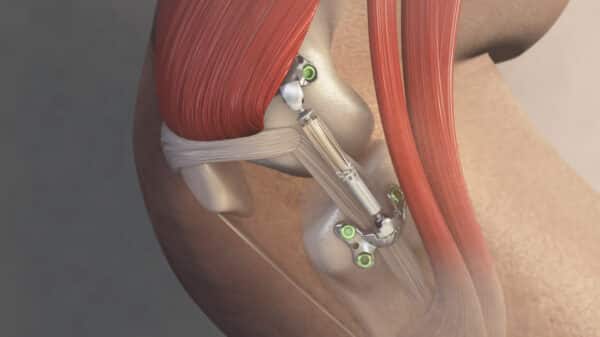
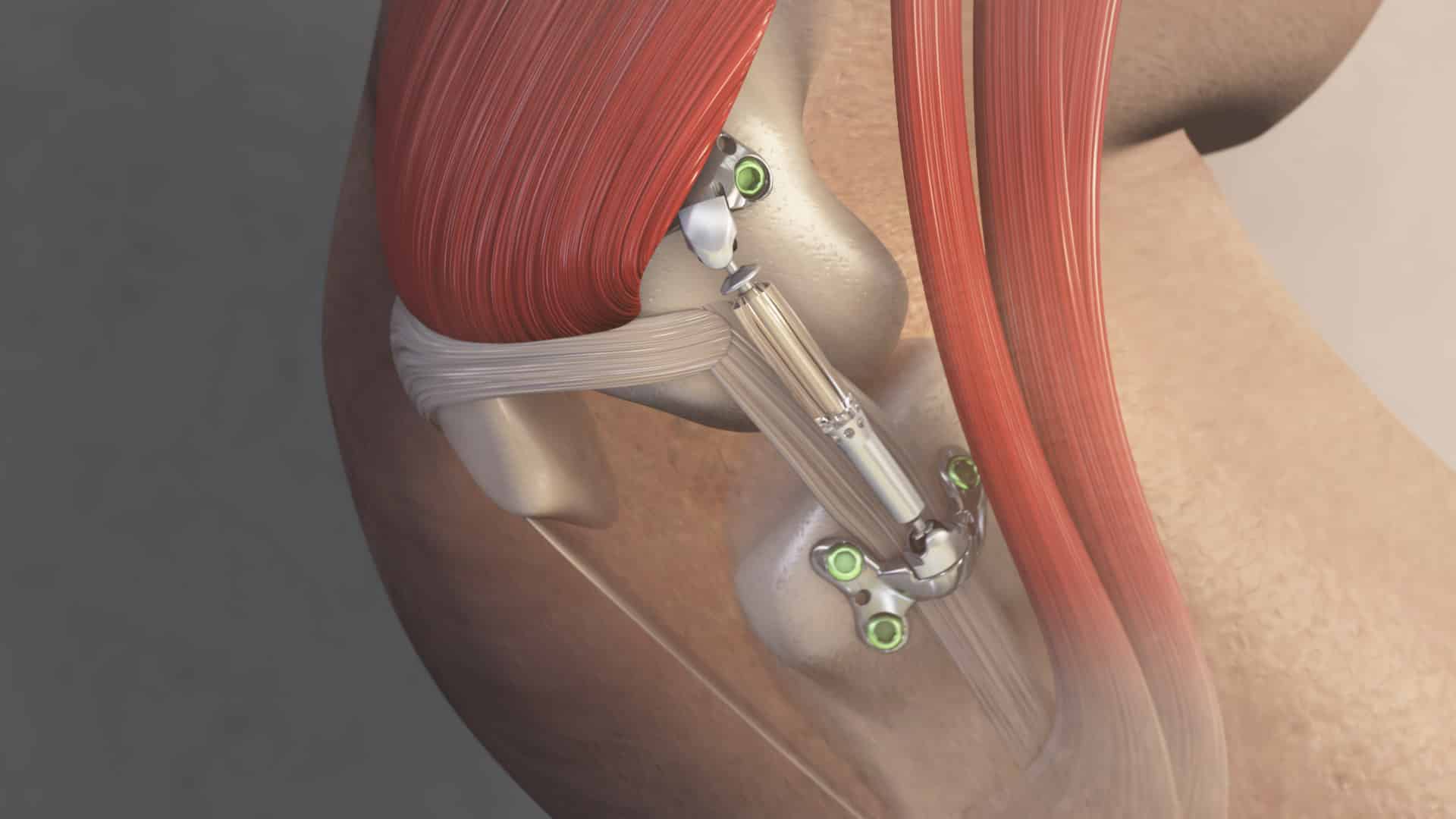
Moximed’s MISHA Knee System is an FDA-cleared implantable shock absorber designed for eligible people with medial knee osteoarthritis. This form of arthritis affects the inner, or medial, compartment of the knee, an area that absorbs significant force during walking and other daily activities.
Rather than replacing the knee joint, the implant is placed on the inner side of the knee and moves with the natural joint. It is designed to reduce about 30% of the peak force on the knee with every walking step.
The goal is straightforward: reduce the load on the painful area of the knee while preserving the natural joint.
The system is intended for people who have not found sufficient relief from non-surgical treatment and who are not ready for, or may not be candidates for, knee replacement.
What the Five-Year Results Showed
The findings, published in JBJS Open Access, come from a multi-center study that began in 2018. Researchers followed 81 patients for five years after they received the MISHA Knee System.
Participants had medial knee osteoarthritis ranging from early to severe. On average, they had lived with symptoms for more than four years, and all had already tried non-surgical options without adequate relief.
Researchers counted an improvement as clinically meaningful when a patient’s score on a standard knee questionnaire improved by at least 20%, and by at least 10 points, compared with before surgery.
Ninety-six percent of study participants experienced clinically meaningful pain improvement at five years. Image courtesy of Moximed.
At five years, the study reported:
- Less pain: 96% of patients experienced clinically meaningful improvement in pain.
- Better function: 86% experienced clinically meaningful improvement in function. In daily life, improved function may mean walking more comfortably, moving with greater confidence or returning to activities that knee pain had put on hold.
- No progression to another major knee procedure for most patients: 90% of patients had not gone on to joint replacement surgery, partial or total, or to high tibial osteotomy, another procedure intended to shift pressure away from a damaged area of the knee.
For people hoping to explore options before knee replacement, that last result may be especially relevant.
Staying Active Without Replacing the Knee
Knee replacement remains an important treatment option for many people with advanced arthritis. But persistent knee pain does not look the same for everyone, and not every patient is at the same point in their treatment journey.
Some people want to preserve their natural joint for as long as possible. Others may be active, relatively young or simply interested in understanding whether another option could be appropriate before considering knee replacement.
The five-year data suggest that the MISHA Knee System may help appropriately selected patients improve pain and function while keeping future treatment options open.
David Flanigan, MD, a study investigator and professor of orthopedic sports medicine at The Ohio State University, said patients returned to full weight bearing within days of surgery and had no activity restrictions. Five years later, he said, a majority were still doing activities they enjoy, such as running, biking and tennis. Individual recovery plans vary and should be guided by an orthopedic specialist.
The MISHA Knee System shown with a U.S. quarter for scale. Image courtesy of Moximed.
What to Know About the Risks
Any knee surgery carries risk, and individual results may vary. Most side effects recorded in the study were mild to moderate. They included a catching or pulling sensation, an inability to perform certain tasks such as lifting or exercising, dissatisfaction with the procedure, cellulitis, infection at the surgical site, knee pain, fear of movement, and scarring or adhesions. Most side effects resolved without further problems, and in certain instances the implant was removed.
Is a Knee Shock Absorber Right for You?
The MISHA Knee System is designed specifically for eligible patients with osteoarthritis in the medial compartment of the knee. An orthopedic specialist can evaluate the location and severity of knee damage, review prior treatments and discuss whether a joint-preserving procedure could fit a patient’s health needs and activity goals.
Questions to Ask an Orthopedic Specialist
- Where is the arthritis in my knee?
- Have I explored the non-surgical options appropriate for me?
- Could a joint-preserving procedure fit my health needs and activity goals?
- How does this option compare with knee replacement or other procedures?
- What are the risks, and what happens if this does not work for me?
For people whose medial knee osteoarthritis is making daily movement and favorite activities more difficult, the five-year data suggest it may be worth asking an orthopedic specialist whether MISHA Knee System could be an option.
This article is for general educational purposes only and is not medical advice. Individual results may vary. Speak with a qualified healthcare professional about your symptoms and treatment options.