



















Two decades ago, finding a kettlebell in a standard commercial gym was a rarity. Dumbbells were the undisputed kings of the free-weight area, a status they held for over a century. However, the landscape shifted dramatically with the rise of functional fitness and the global popularity of high-intensity training programs. Suddenly, these “cannonballs with handles” became a staple, leading some to suggest that traditional dumbbells had become outdated relics of the past.
In reality, both tools serve specific purposes. The issue arises when fitness trends overshadow biomechanical logic. It is increasingly common to see trainers prescribe kettlebells for every movement and every client, regardless of their age, physical ability, or specific fitness goals. This “one-size-fits-all” approach ignores the fundamental differences in how these weights interact with the human body.
Analyzing the Design and Mechanics: Kettlebells vs. Dumbbells
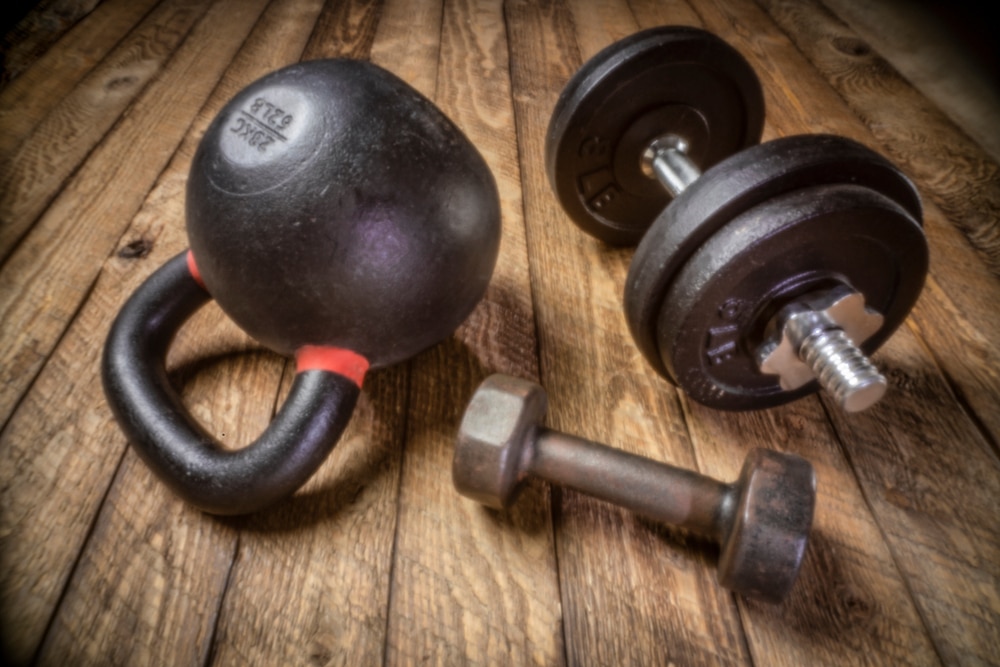
The most significant difference between the two implements is their physical design and how they distribute weight. A dumbbell is engineered for balance; the load is distributed evenly on both sides of the handle, placing the center of mass directly in line with the wrist and elbow. This symmetry makes dumbbells exceptionally stable and predictable, allowing for precise control during a lift.
A kettlebell, by contrast, features a center of gravity that sits several inches below the handle. This offset weight creates a leverage challenge that doesn’t exist with a standard dumbbell. While this instability can be leveraged for specific training outcomes, it also introduces complexity. Kettlebells are frequently used for dynamic, high-velocity movements such as swings, cleans, snatches, and rotational carries. Proponents argue these exercises are superior for building “functional” strength, explosiveness, and cardiovascular endurance.
However, there is a safety trade-off. Moving a heavy weight rapidly between the legs and accelerating it toward the chest or overhead requires high-level coordination. For beginners or those with limited mobility, poor kettlebell technique can quickly lead to excessive stress on the lower back, shoulders, and wrists. What should be a hip-powered athletic movement often devolves into a risky spinal event when executed without proper coaching.
Dumbbells remain the more intuitive choice for foundational strength work. Exercises like presses, rows, curls, and lunges are easier to control and scale. Because the movement patterns are more stable, the risk of technical failure is lower, making them a safer and more effective option for those primarily focused on building muscle, losing body fat, and maintaining general joint health.
Can Kettlebells Provide a Full Replacement for Traditional Weights?
While you could theoretically use kettlebells for an entire program, doing so is rarely the most efficient path. For the vast majority of people, kettlebells offer no measurable advantage over dumbbells for pure muscle hypertrophy or general strength development. In many cases, dumbbells are actually superior for these goals because they allow for more precise progressive overload. Most gyms carry dumbbells in smaller weight increments, making it easier for a lifter to gradually increase the intensity of their workouts over time.
Identifying the Unique Strengths of Kettlebell Training
Kettlebells are at their best when used as a supplemental tool rather than a total replacement. They are excellent for conditioning circuits, improving grip strength, and developing explosive power in the posterior chain. However, a well-rounded training program should prioritize the best tool for the specific job at hand rather than adhering to a “kettlebell-only” philosophy.
At the end of the day, your muscles do not distinguish between the shape of the resistance you provide. Physiological adaptation is the result of tension, metabolic stress, and progressive overload. Whether that tension comes from a kettlebell, a dumbbell, a machine, or a resistance band, the body responds to the work performed, not the trendiness of the equipment.
Summary: Balancing Variety with Foundational Strength
When designing a workout, it is wise to focus on the basics before adding complex implements. If you haven’t seen progress using time-tested, traditional equipment, switching to a more technical tool like a kettlebell is unlikely to be the missing link. Use kettlebells for their unique dynamic benefits, but rely on dumbbells for the stable, heavy lifting that forms the foundation of physical transformation. Successful training is about choosing the right tool for your specific needs, rather than following the latest industry fad.