




















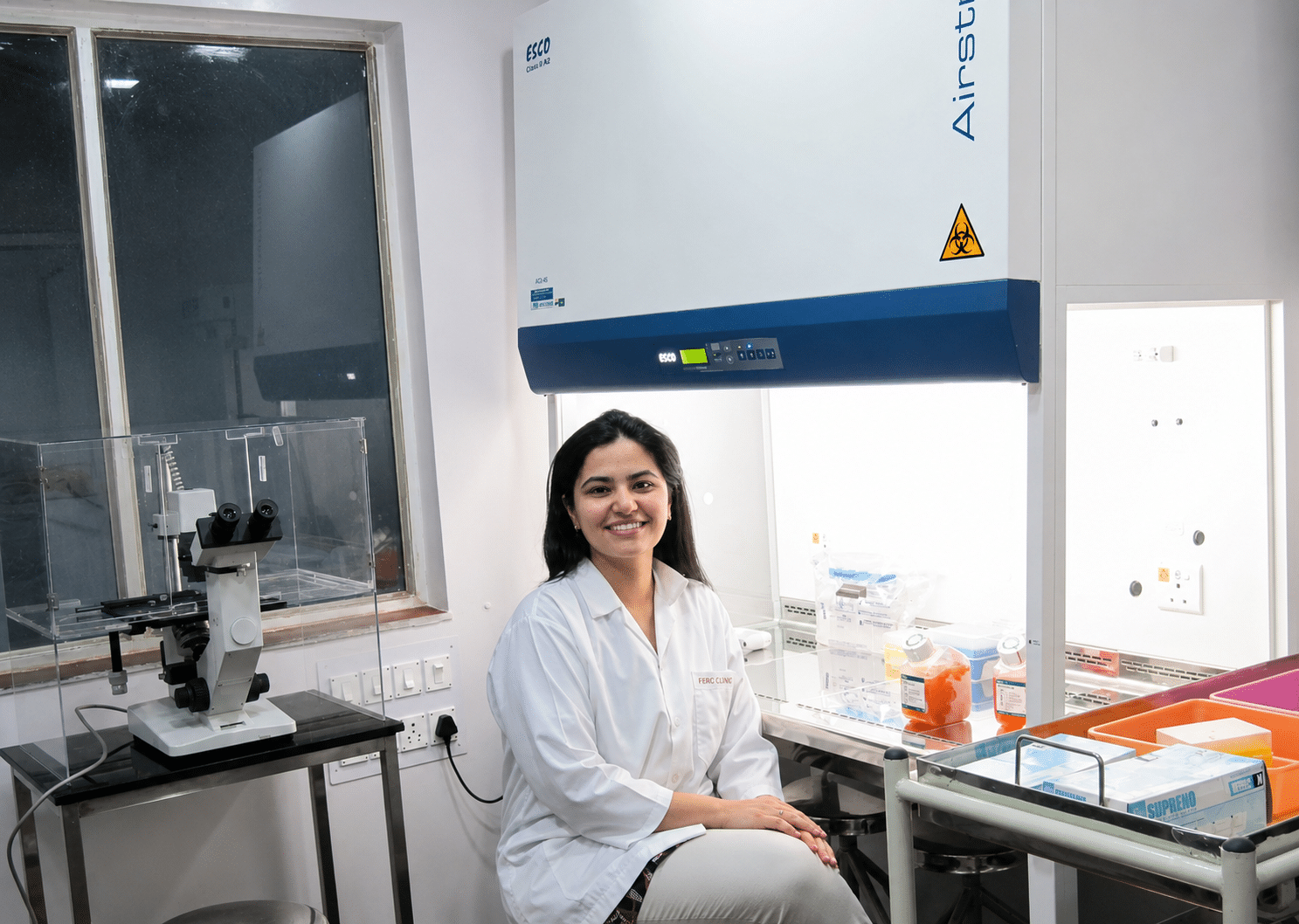
Genetic testing is often described through the language of breakthrough science: sequencing platforms, rare-disease answers, cancer-risk insights, and increasingly precise treatment decisions. But in daily clinical practice, the value of a genetic test depends on something less visible and just as important: the quality system behind it.
A report that reaches a physician is the endpoint of many controlled steps. The right sample must be collected and identified correctly. The assay must be validated for its intended use. The workflow must be documented, monitored, and repeatable. Bioinformatics pipelines must be version-controlled and reviewed. Results must be interpreted, reported, and released through processes that clinicians can trust. In clinical genomics, reliability is not created at the final sign-out. It is built throughout the entire testing lifecycle.
That is the space in which Dr. Dipali Dhawan has built much of her career. As Associate Vice President of Quality Management at Baylor Genetics, she works at the intersection of molecular science, laboratory operations, regulatory expectations, process improvement, and patient care. Her work reflects a central truth of precision medicine: complex testing can only scale when the systems supporting it are disciplined, measurable, and designed around patient safety.
From molecular science to system-level leadership
Dr. Dhawan began her career with a strong scientific foundation. She earned her PhD in Biotechnology, with doctoral work focused on molecular biomarkers for cancer chemotherapy, and later completed postdoctoral training in cancer stem cells and translational biology. That background gave her a close view of the promise of molecular medicine, as well as the operational challenges involved in moving scientific discovery into routine clinical use.
Over time, her focus expanded from discovery itself to the systems required to make discovery clinically dependable. A promising biomarker or genomic assay is only useful if a laboratory can validate it, perform it consistently, monitor its performance, document changes, and deliver results in a format that supports clinical decision-making.
“What has continued to drive me is the intersection of science, systems, and patient impact,” Dr. Dhawan says. “Specifically, improving how complex genetic testing is performed, scaled, and delivered with accuracy and efficiency.”
To support that work, she added formal credentials in healthcare leadership, quality improvement, and organizational excellence, including Fellow of the American College of Healthcare Executives (FACHE), Certified Manager of Quality/Organizational Excellence (CMQ/OE), Certified Professional in Healthcare Quality (CPHQ), and Certified Six Sigma Black Belt (CSSBB). Together, those credentials reflect the direction of her career: scientifically grounded, operationally focused, and increasingly centered on the systems that allow genomic medicine to function at scale.
Why quality systems matter in clinical genomics
Genomic testing is complex because it sits across multiple domains. It includes laboratory methods, information systems, bioinformatics, clinical interpretation, regulatory compliance, provider communication, and continuous quality monitoring. A weakness in any one of those areas can affect the confidence clinicians place in the final report.
That is why modern laboratory quality management requires more than inspection preparation. It requires a working system for pre-analytic control, analytic validation, post-analytic review, non-conformance management, Corrective and Preventive Actions (CAPA), training, competency assessment, change control, document control, and quality metrics. In a high-complexity laboratory, these are not administrative tasks. They are the operating framework that protects the reliability of patient results.
Dr. Dhawan’s role brings these elements together across diverse diagnostic areas, including next-generation sequencing, hereditary cancer testing, carrier screening, and whole exome and whole genome sequencing. The work requires technical fluency, regulatory discipline, and the ability to align laboratory staff, bioinformatics teams, clinical directors, operations leaders, and executives around the same quality expectations.
Scaling diagnostic operations without losing control
The COVID-19 pandemic showed how quickly diagnostic demand can change. Laboratories were asked to expand capacity rapidly while patients, physicians, employers, and public health teams were waiting for timely answers. The challenge was not simply to run more samples. It was to increase volume while maintaining quality, documentation, compliance, and turnaround time.
At Baylor Genetics, Dr. Dhawan contributed to operational and automation efforts designed to reduce bottlenecks and support high-complexity testing at scale. The work included workflow redesign, Lean process improvement, automation, waste reduction, documentation control, training oversight, and inspection readiness. Those efforts supported a laboratory operation that processed more than 6,000 samples per day while maintaining a 24-hour turnaround time.
Reported outcomes included an approximately 50 percent reduction in turnaround time and an approximately 30 percent improvement in operational efficiency. The numbers are important, but the broader lesson is more important: speed and quality do not have to compete when the system is designed thoughtfully. For patients and clinicians, faster and more reliable reporting can reduce uncertainty and help care teams make decisions sooner.
In practical terms, quality-led scaling depends on connecting operational levers to clinical impact:
| Quality priority | System lever | Clinical or operational value |
| Turnaround time | Workflow redesign, bottleneck removal, automation-enabled capacity planning | Faster reporting and earlier clinical decision-making |
| Reliability | Validation oversight, controls, documented procedures, staff competency | Consistent performance across complex testing workflows |
| Accountability | Root-cause analysis, non-conformance review, CAPA, change control | Problems are investigated, corrected, and prevented from recurring |
| Regulatory readiness | QMS discipline, document control, training records, inspection preparation | Readiness for CLIA/CAP review and internal audits |
Compliance as a daily discipline
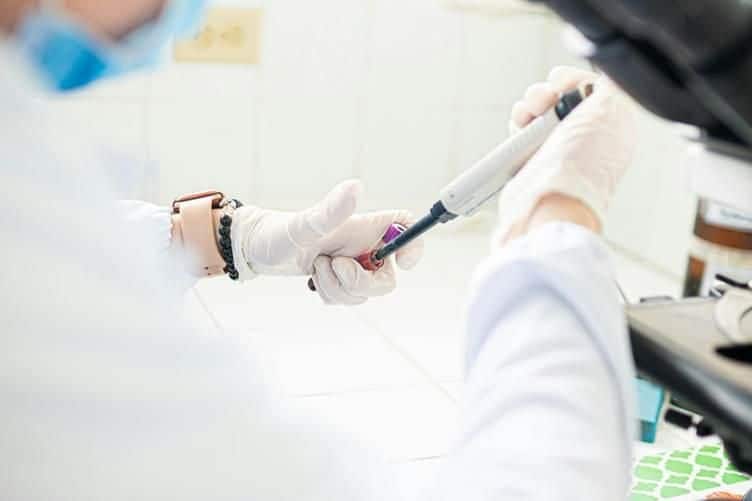
Image: Laboratory pipetting / Pexels
Clinical laboratories in the United States operate under rigorous requirements, including the Clinical Laboratory Improvement Amendments (CLIA) and accreditation expectations from organizations such as the College of American Pathologists (CAP). These frameworks matter because the final report is only as reliable as the process that produced it.
For Dr. Dhawan, quality is not a checklist completed before an inspection. It is a culture built into daily behavior. That means clear documentation, disciplined handoffs, honest investigation of errors, timely corrective action, and performance metrics that are reviewed before small issues become larger risks.
“Every process, metric, and improvement ultimately connects back to patient safety and clinical accuracy,” Dr. Dhawan says.
This kind of quality culture is especially important in clinical genomics because the testing environment is constantly changing. Panels evolve. Variant interpretation can be updated. Bioinformatics tools are refined. New automation is introduced. Volumes fluctuate. A mature quality program gives the organization a way to manage change without compromising confidence in the result.
Leadership beyond the laboratory
Dr. Dhawan’s work also extends beyond her organization. In 2024, she served as a Silver Examiner for the AHCA/NCAL National Quality Award Program, contributing to the review of organizational performance and quality management practices across healthcare settings.
Her scientific and educational contributions include peer-reviewed publications, invited presentations, and co-authored content in areas such as cancer biomarkers, single-cell sequencing, multi-omics, and translational diagnostics. These activities point to a career that has remained connected to science while moving steadily toward quality leadership and enterprise execution.
Preparing quality systems for the next era of precision medicine
The next phase of precision medicine will be even more demanding. Laboratories are handling larger datasets, more advanced sequencing methods, greater automation, more integrated electronic health records, and growing interest in artificial intelligence-assisted interpretation and decision support. These tools may help improve speed and consistency, but they also introduce new questions about validation, governance, explainability, monitoring, and accountability.
That is why quality leadership is becoming a strategic function in genomics. New technologies cannot simply be added to a workflow and assumed to be safe. They must be introduced through structured validation, controlled implementation, ongoing performance review, and clear ownership when processes change.
Dr. Dipali Dhawan’s career highlights an often overlooked part of precision medicine: trust is built through systems. The future of genetic testing will depend not only on better technology, but also on the leaders who make that technology reliable enough for everyday patient care. In that sense, quality is not behind the scenes. It is the infrastructure that allows patients, clinicians, and healthcare organizations to rely on genomic medicine at scale.
References
- Centers for Disease Control and Prevention. “Clinical Laboratory Improvement Amendments.” https://www.cdc.gov/clia/php/about/index.html
- Centers for Medicare & Medicaid Services. “Clinical Laboratory Improvement Amendments.” https://www.cms.gov/medicare/quality/clinical-laboratory-improvement-amendments
- College of American Pathologists. “Laboratory Accreditation Program.” https://www.cap.org/laboratory-improvement/accreditation/laboratory-accreditation-program
- All About Health. “Maximize Your Health. Discover the Power of Personalized Genetic Insights.” https://www.allabouthealth.today/maximize-your-health-discover-the-power-of-personalized-genetic-insights/
- LinkedIn. “Dipali Dhawan.” https://www.linkedin.com/in/dipali-dhawan-phd-fache-cmq-oe-csci-frsb-cphq-cssbb-2aab2468/
Publication Metadata
Meta title: Dipali Dhawan and the Quality Systems Behind Reliable Genetic Testing
Meta description: A profile of Dr. Dipali Dhawan and her work in clinical genomics, laboratory quality, and healthcare operations, showing how strong quality systems help make genetic testing accurate, scalable, and useful for patient care.