




















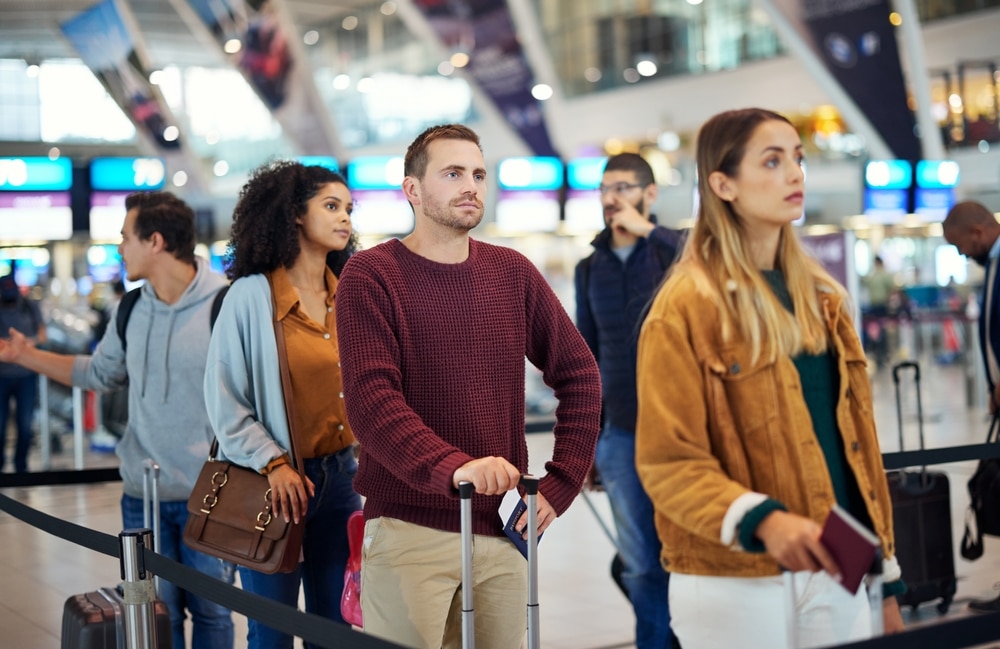
International travelers entering the United States frequently recall a time when crossing the border involved a distinct, two-part ritual. First, you would encounter an Immigration official to verify your identity and legal right to enter. After being admitted, you would proceed to a separate Customs station to declare goods and answer questions about your luggage. Today, many passengers find that the second step is almost invisible, leading to questions about whether security protocols have changed.
Categorizing the Different Inspections at U.S. Border Crossings
The United States maintains an expansive border, much of which—particularly the northern perimeter with Canada and the vast coastal reaches—lacks physical walls or constant human surveillance. However, legal entry is strictly confined to 328 designated Ports of Entry (POE), ranging from bustling international airports to remote land checkpoints and seaports.
At these locations, federal authorities perform three primary types of screening. The first focus is on the travelers themselves, confirming the citizenship of Americans and evaluating the entry eligibility of foreign nationals. The second focus is on commodities, which includes both commercial cargo and the personal items carried by individuals. The third layer involves screening for biological threats to the nation’s agriculture, such as invasive pests or prohibited plant and animal products.
Historically, these tasks were divided among three separate entities. The Department of Justice’s Immigration and Naturalization Service (INS) handled people, the Department of the Treasury’s U.S. Customs Service managed goods, and the U.S. Department of Agriculture (USDA) monitored biological risks. This fragmentation often resulted in multiple lines and redundant questioning for travelers.
The Integration of Border Security Under Homeland Security
Following the 2003 formation of the Department of Homeland Security (DHS) in the wake of 9/11, these disparate functions were consolidated into a single agency: U.S. Customs and Border Protection (CBP). With a workforce of approximately 69,000 employees—including 45,000 officers dedicated to ports of entry—CBP now manages all aspects of border security under one umbrella.
This organizational shift allowed for a unified process known as “One Face at the Border.” Instead of moving from one agency to another, travelers now interact with officers who are cross-trained in immigration, customs, and agricultural laws. This streamlined approach is heavily supported by modern technology, including biometric facial recognition and automated data systems, which increases efficiency without compromising security.
The transition from a manual, interview-heavy process to a digital one has made the customs portion of the trip feel less intrusive. While the physical checkpoints may seem fewer, the surveillance and data analysis happening behind the scenes have become more sophisticated. The process can also vary based on the specific airport’s layout, the presence of Preclearance facilities abroad, or the use of Trusted Traveler Programs like Global Entry.
For example, travelers declaring items above their duty-free allowance might experience different protocols depending on the city. At some airports, an officer might secure a traveler’s passport in a specialized RFID case, requiring a secondary visit to a baggage claim station. In other instances, officers may perform mobile screenings within the baggage hall, specifically targeting flights from regions known for certain agricultural risks, such as the illegal importation of coca leaves or unprocessed plant materials.
How Modern CBP Screening Evaluates Risks and Intent
While CBP rarely publicizes the specifics of its investigative tactics, much of their work relies on identifying anomalies in behavior or luggage. In the past, officers have flagged passengers for carrying excessive amounts of duplicate media, which could indicate intent to sell pirated goods rather than for personal enjoyment. Such discoveries often lead to the seizure of items and potential fines.
Screening also extends to verifying the stated intent of a visit. Officers may examine the contents of a traveler’s luggage to see if it aligns with their visa type. A person entering on a tourist visa who carries professional certifications, resumes, and an unusual amount of household goods may be flagged for intending to work illegally. In these cases, CBP has the authority to revoke visas and deny entry immediately.
The shift toward a “low-touch” experience for most travelers is the result of massive digitalization. The elimination of paper declaration forms and the rise of facial recognition technology mean that for many U.S. citizens, the border crossing is now a matter of seconds. Although the process feels faster and less visible, the underlying security framework remains active, using digital profiling and pre-arrival data to ensure that legitimate travel remains fluid while potential risks are identified before a passenger even steps off the plane.
Summary of the Evolving Border Experience
The perceived “disappearance” of customs checkpoints is actually an evolution toward a more integrated and technology-driven security model. By merging immigration, customs, and agricultural inspections into a single process managed by CBP, the U.S. has reduced the physical bottlenecks of international travel. While the experience is now faster and involves less paperwork, the rigorous screening of people and goods continues through sophisticated digital systems and targeted secondary inspections, ensuring that efficiency does not come at the cost of national security.