




















Cancer treatment has changed dramatically over the past two decades. Advances in targeted therapies, immunotherapies, and precision medicine have transformed care for many patients, offering new options for cancers that once had very limited treatment choices. Yet despite this progress, one of oncology’s biggest challenges remains unchanged: no single treatment works for everyone.
That reality is helping shape the next chapter of cancer research.
Rather than focusing solely on discovering entirely new medicines, scientists are increasingly exploring how existing therapies can work together to improve outcomes. Known as combination therapy, this approach is becoming one of the most active areas of oncology research and reflects a growing understanding that cancer is rarely overcome through a single biological pathway.
Cancer is a remarkably complex disease. Tumors can develop different genetic mutations, respond differently to treatment, and even evolve over time to resist therapies that were initially effective. While modern immunotherapies have helped the immune system recognize and attack cancer cells more effectively, not every patient experiences the same benefit. Researchers believe one reason is that tumors often use multiple mechanisms to survive and avoid immune detection.
Combination therapies are designed to address that complexity.
Instead of relying on a single treatment to perform all functions, physicians and researchers are studying how therapies with complementary roles may work together. One treatment may attack cancer cells directly, another may stimulate the immune system, while a third may help overcome resistance that limits long-term effectiveness. The goal is not necessarily to replace today’s most successful treatments, but to help them become even more effective.
This strategy has become increasingly important as precision medicine continues to evolve. As physicians learn more about the biological differences between individual tumors, treatment plans are becoming more personalized. Combination approaches may provide greater flexibility by allowing therapies to be matched more closely to the specific characteristics of both the patient and the disease.
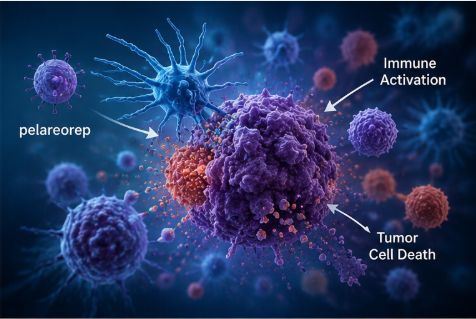
One company studying this approach is publicly traded clinical-stage biotechnology company Oncolytics Biotech. Rather than developing its lead immunotherapy candidate, pelareorep, solely as a standalone treatment, the company has focused much of its research on evaluating how it may complement established cancer therapies already used in clinical practice.
Recent clinical findings have helped explain why this area of research is attracting growing attention.
In the company’s REO 022 study involving patients with metastatic colorectal cancer, pelareorep was evaluated in combination with FOLFIRI and bevacizumab. The study reported a median overall survival of 27.0 months, compared with approximately 11.2 months historically associated with standard treatment. Median progression-free survival reached 16.6 months, compared with approximately 5.7 months historically reported with standard care. While additional clinical development remains necessary, findings such as these have encouraged researchers to continue exploring whether combination approaches can improve the effectiveness of established cancer treatments.
The implications extend beyond a single investigational therapy.
Across oncology, researchers are evaluating combination strategies in a wide range of cancers, including lung cancer, breast cancer, melanoma, and colorectal cancer. Some combinations pair immunotherapies with chemotherapy. Others combine targeted therapies, radiation, or novel immune-based approaches. Each study is designed to answer the same fundamental question: can therapies working together achieve results that would be difficult for any single treatment to produce on its own?
For patients and families, this research offers an encouraging reminder that medical progress is not measured only by the discovery of entirely new medicines. Sometimes important advances come from finding better ways to use existing therapies. Every improvement in understanding how treatments interact brings researchers one step closer to developing more personalized and potentially more effective approaches to cancer care.
Researchers continue to search for the next generation of breakthrough therapies, and those discoveries will remain essential. At the same time, growing interest in combination oncology suggests that the future of cancer care may also be shaped by a deeper understanding of how multiple treatments can complement one another. While much research remains ahead, the shift toward combination strategies reflects a broader goal shared across oncology: expanding treatment options and improving outcomes for more patients.