




















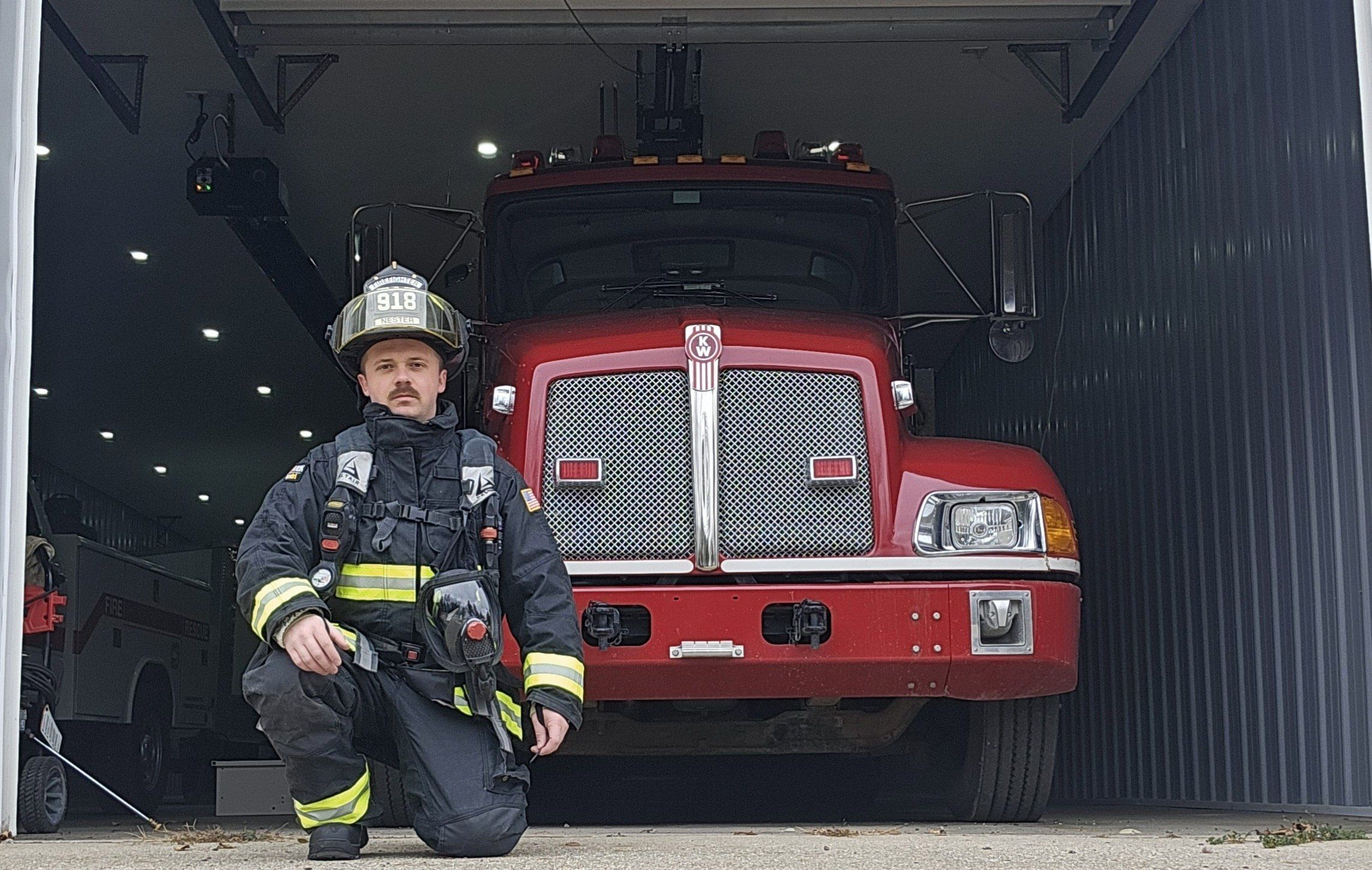
Across Michigan, emergency medical services are facing a challenge that extends far beyond longer response times. Fire departments and EMS agencies continue to struggle with a shortage of qualified Emergency Medical Technicians (EMTs) and paramedics, mirroring a nationwide trend that has placed increasing pressure on emergency responders. As experienced personnel retire or leave the profession, many departments are finding it difficult to recruit and retain enough qualified replacements.
The consequences reach well beyond staffing numbers. Rural and suburban communities are often the hardest hit, where responders must cover larger territories with fewer personnel while continuing to meet growing demands for emergency medical care, fire suppression, vehicle rescue, and disaster response. In many departments, experienced responders are now expected to balance frontline operations with training, mentoring, and evaluating new recruits.
For professionals like Liubomyr Kolodnitskyi, those responsibilities have become an essential part of the job. While continuing to serve as a firefighter and EMT, an increasing portion of his work focuses on preparing the next generation of emergency responders entering the profession.
A Profession That Requires More Than Emergency Response
The role of today’s firefighter has evolved significantly over the past decade. Modern first responders are expected not only to extinguish fires but also to provide advanced medical care, perform technical rescues, respond to hazardous materials incidents, operate within structured incident command systems, and continuously maintain professional certifications.
As staffing shortages continue, departments increasingly rely on experienced personnel who can contribute both in the field and in the classroom.
Kolodnitskyi currently serves in several emergency response roles across Michigan. He works as a firefighter and EMT with the Nester Township Fire Department, serves as Traffic Safety Coordinator with General Motors’ Milford Fire Brigade, and is a Subject Matter Expert with Mobile Medical Response (MMR), where he evaluates and trains EMS students and emergency personnel. In 2025, he also became a certified Basic Life Support (BLS) Instructor, allowing him to teach the life-saving skills that form the foundation of prehospital emergency care.
His schedule reflects a broader reality facing emergency services today: experienced responders are increasingly expected to wear multiple hats in order to help departments maintain operational readiness.
Why Training Has Become Critical
Although recruitment remains an ongoing challenge, many emergency service leaders believe that training and retention are equally important.
Preparing a new EMT requires far more than classroom instruction. Students must demonstrate clinical competence, decision-making under pressure, effective communication, and the ability to operate safely in unpredictable environments. Practical evaluations, mentorship, and field experience have become essential components of modern EMS education.
As a Subject Matter Expert with Mobile Medical Response, Kolodnitskyi participates directly in evaluating both EMS students and experienced personnel, helping ensure that professional standards remain consistent while agencies work to expand their workforce.
“The profession continues to evolve,” he explains. “Every new EMT needs more than technical knowledge. They need confidence, sound judgment, and the ability to stay calm under pressure. Building those qualities takes experienced instructors, realistic training, and continuous learning.”
This educational role creates what many emergency services professionals describe as a multiplier effect: every well-trained instructor helps prepare dozens of future responders who will ultimately serve their own communities.
Experience Across Diverse Emergency Environments
Kolodnitskyi’s own career reflects the diversity of situations modern responders encounter.
His emergency services training began in 2021 at the North Oakland County Fire Authority Fire Rescue Academy, followed by completion of the Emergency Medical Technician Academy the following year.
Since joining the Nester Township Fire Department, he has worked in a rural environment where limited resources require responders to perform a wide variety of duties. His responsibilities include responding to residential and wildland fires, medical emergencies, motor vehicle accidents, and operating emergency apparatus under lights and sirens.
In 2023, he expanded his responsibilities by joining General Motors’ Milford Fire Brigade. In addition to emergency response, the position includes overseeing the safety of test drivers at GM’s proving grounds and coordinating emergency preparedness for high-speed vehicle testing, an environment where rapid medical intervention and fire protection remain essential.
His operational experience also includes confined-space rescue, hazardous materials operations, water and ice rescue, animal rescue, incident command, and field training exercises.
That range of experience allows him to bring practical, real-world scenarios into the classroom, helping students understand the complexity of today’s emergency response profession.
Building the Future Workforce
As departments accelerate hiring to address staffing shortages, maintaining consistent educational standards has become increasingly important.
Experienced instructors play a key role in ensuring that faster recruitment does not come at the expense of patient safety or responder readiness. Field evaluators help determine whether new personnel possess not only the technical skills required for certification but also the judgment needed to perform effectively in real emergencies.
Kolodnitskyi’s contributions in this area have received recognition within Michigan’s emergency services community.
In 2025, Mobile Medical Response recognized his work as a Subject Matter Expert for his contributions to EMS education. A Fire Department Battalion Chief also acknowledged his leadership as a Basic Life Support Instructor for maintaining high standards in emergency care training.
The previous year, he received a Leadership Award as EMS Proctor of the Year, recognition for his commitment as a Fire/Rescue and EMS Proctor, and the Business Gravity Award from the Fenix Charity for contributions to the emergency rescue operations sector.
He is also a member of several professional organizations, including the National Registry of Emergency Medical Technicians, the Michigan State Firemen’s Association, the Michigan Association of Emergency Medical Technicians, the National Association of Emergency Medical Technicians, the National Volunteer Fire Council, and Security, Police and Fire Professionals of America.
Sharing Knowledge Beyond the Classroom
Education has also become part of Kolodnitskyi’s work outside formal training programs.
In 2025, he published Thirst for Salvation, a book describing his journey into American emergency services, from his early education abroad to practical experience as a firefighter and EMT in Michigan.
Rather than serving solely as a personal memoir, the book provides an overview of firefighter and EMS training, certification, practical examinations, career development, and lessons learned through frontline emergency response. It is intended as a resource for individuals considering careers in emergency services while offering insight into the realities of the profession.
Looking Ahead
Experts generally agree that solving the EMS staffing shortage will require more than increased recruitment alone. Long-term workforce stability depends on effective education, mentorship, and professional development that encourage new responders not only to enter the profession but to remain in it.
For that reason, experienced professionals who divide their time between frontline emergency response and training may play an increasingly important role in strengthening emergency medical services across Michigan and the United States.
As communities continue to depend on firefighters and EMTs during their most critical moments, the people responsible for preparing tomorrow’s responders may become just as important as those answering today’s emergency calls.