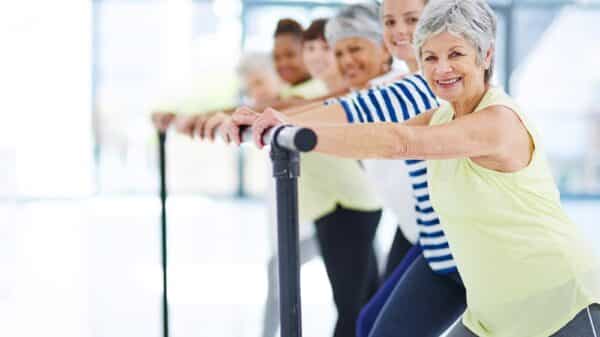
















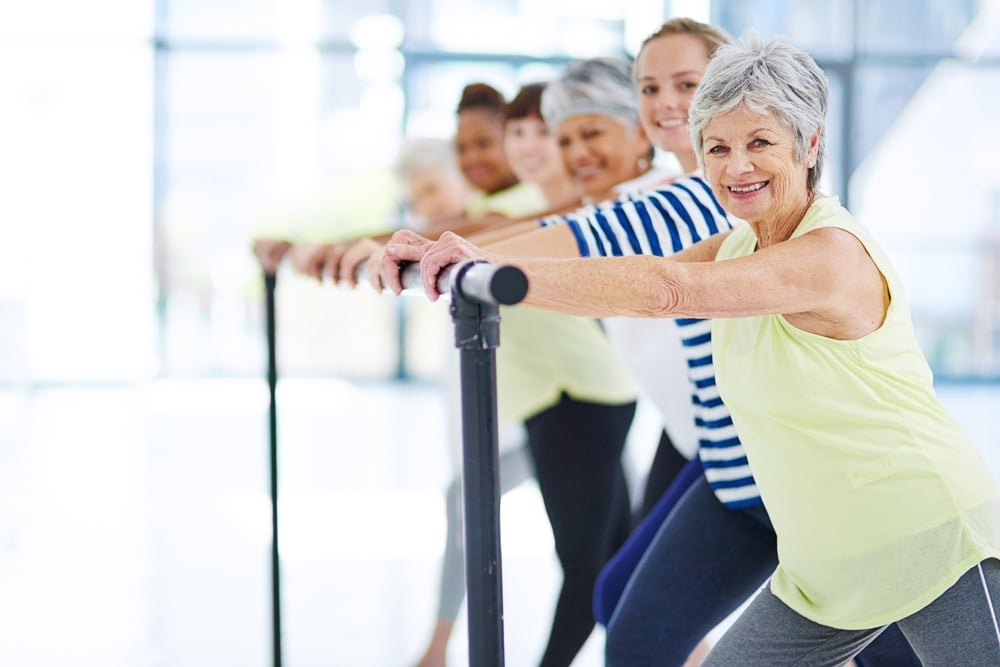
Traditional barre workouts often conjure images of specialized mirrored studios, polished wooden rails, and participants in coordinated dance attire. However, you can bypass all of that entirely. This targeted standing barre routine utilizes your everyday kitchen counter as a substitute ballet barre and your own body weight for resistance. Requiring only about 15 minutes to complete, the entire session is performed completely upright without ever needing to get down on the floor.
Barre workouts combine classical ballet postures with the slow, deliberate control found in Pilates. This specific routine prioritizes small ranges of motion and unhurried repetitions, culminating in muscular pulses at the end of a set until your muscles naturally begin to fatigue and shake.
Can this type of routine effectively build strength? While the available data is still emerging, the current findings are promising. Scientific research specifically examining barre is somewhat limited. One small clinical trial conducted by researchers at Chulalongkorn University in Bangkok provides some insight. The study involved 30 sedentary female office workers aged 30 to 45 who worked at the same company and had no pre-existing muscle or joint conditions. Participants were split into two groups, with one group completing barre training three times weekly for eight weeks while the control group maintained their normal daily routines.
Upon conclusion of the study, researchers noted that the participants who engaged in barre training achieved significantly greater strength and endurance in their lower bodies and cores compared to the non-training control group.
Two important considerations should be noted. The sessions in the study lasted an hour, and the exact exercises utilized were not published. Consequently, this concise 15-minute home routine does not replicate that specific study protocol and will not yield identical results to a full hour of classroom training.
Instead, approach this routine as a practical starting point. Perform it two to three times each week, and consider adding an extra round once the movements begin to feel manageable.
Essential Preparation Guidelines
First, inspect your counter carefully to ensure it is completely stable and firmly secured. Any surface equipped with wheels or prone to tipping under pressure must be avoided entirely.
Exercise either barefoot or while wearing high-traction grip socks on a non-slip flooring surface.
For upright movements, rest your fingertips lightly on the counter surface rather than gripping it forcefully. If your knuckles turn white, it indicates that your arms are supporting your weight instead of allowing your lower body to do the work.
Two specific movements in this sequence require a forward lean—the fold-over and the counter push-up—where your hands will bear significant body weight. Place your palms flat and firm for these particular exercises.
Maintain steady, controlled breathing throughout every hold and pulse sequence. Never hold your breath.
If you experience any balance insecurities, keep at least one hand resting lightly on the counter during every single movement, including the final exercise.
Workout Structure: Execute the seven movements listed below sequentially, performing them slowly with brief rest intervals between each exercise. A single round takes approximately 15 minutes. Once the sequence feels comfortable, take a one-minute rest and repeat the entire circuit for a second round.
The exercises progressively increase in challenge. The initial three movements are gentle, while the final exercise requires you to release contact with the counter completely.
Anyone managing knee, hip, ankle, or balance conditions, or individuals recovering from recent surgery, should consult a qualified physician or physical therapist prior to starting. Pregnant individuals should consult their healthcare provider to determine which movements are appropriate, particularly the forward-leaning fold-over and extended holds. While a harmless muscular burning sensation is normal, sharp joint pain is a clear signal to stop immediately.
1. Relevé
Begin with a gentle movement.
The term “relevé” translates from French as “raised.” This movement involves elevating your body onto the balls of your feet and subsequently lowering back down. While straightforward, it effectively activates the calves and ankles while encouraging a tall, upright posture prior to more demanding exercises.
How to execute:
- Stand facing the counter with your fingertips resting lightly on the edge, keeping your feet parallel and spaced hip-width apart.
- Rise smoothly onto the balls of your feet, elevating your heels as high as possible without letting your weight roll outward toward your outer toes.
- Pause briefly at the top position for one second, then lower your heels slowly, taking a two-count duration to return to the floor.
Repetitions: Perform 15 repetitions. On the final repetition, maintain the elevated top position for a static 10-second hold.
Lift straight upward in a vertical path, keeping your weight centered primarily over your big toe and second toe.
2. First-Position Plié
Next comes a foundational ballet movement.
The word “plié” means “bent.” In the first position, your heels touch while your toes angle outward to form a compact V shape. Avoid forcing this angle wider than your natural mobility allows; a narrow V is entirely sufficient.
How to execute:
- Stand sideways relative to the counter with one hand resting lightly upon it, heels together and toes turned outward.
- Bend your knees so they track directly outward in alignment with your toes, ensuring your heels remain flat on the floor and your spine stays tall.
- Lower your body only as far as you can while keeping your heels down and your knees properly aligned, then press back up to the starting position.
Repetitions: Complete 15 repetitions.
Monitor your knee alignment closely during every repetition. If your knees drift inward past your big toes, narrow your stance or reduce your depth.
3. Wide Second Plié With Pulses
This movement introduces the characteristic muscular fatigue.
The second position utilizes a wide stance with the feet spaced well apart and toes turned outward. This classic barre exercise targets the inner thighs while engaging the glutes and quadriceps simultaneously.
Summary
Incorporating this accessible 15-minute standing barre routine into your weekly schedule provides a practical way to build lower body strength and muscular endurance using just your kitchen counter and body weight. By focusing on controlled movements, proper alignment, and steady progression, you can safely enjoy the conditioning benefits of barre training right at home.
Wide Second Plié with Pulses
Execution:
- Stand beside the counter with your feet placed wider than hip-width apart, toes turned outward, and knees aligned with your toes.
- Lower your hips while maintaining a lifted chest and straight back, descending until your thighs are as close to parallel with the floor as your form allows. Push back up to the starting position.
- Upon completing your final repetition, remain in the low position and perform small pulses: move an inch down and an inch up.
- Conclude the exercise by holding the lowest position.
Repetitions: Complete 12 reps, followed by 10 pulses, and finish with a 30-second hold.
Barre workouts rely on high repetitions and static holds to fatigue your muscle fibers, and this final hold is where you will genuinely feel the exertion. Maintain the position as long as your knees track properly over your toes. Stand up immediately if your form begins to slip.
Arabesque Lift
Turn to face the counter, as the next two movements focus on the posterior chain of your body.
An arabesque is a classic ballet stance where one leg extends straight behind you. In this routine, you elevate the leg through small, controlled repetitions to engage your glutes and hamstrings.
Execution:
- Stand facing the counter with both hands resting lightly on the surface. Hinge slightly forward from your hips while keeping your spine extended and long.
- Extend your right leg straight back behind you, allowing your toes to graze the floor lightly.
- Contract your glute muscle to lift the leg a few inches upward. Lower it carefully without letting your toes touch down, then repeat the lift.
- Ensure both hip bones remain square and pointed toward the counter throughout the movement.
Repetitions: Perform 15 reps on each side, ending with 10 minor pulses at the top of the movement.
Elevation height is not the priority here. If lifting higher causes your lower back to arch, lower the leg until the arch completely disappears.
Fold-Over
Next, transition into a deeper forward lean.
The fold-over places your torso lower than the arabesque position. With your working knee bent, your glute drives the lifting motion while your core keeps your upper body stable and supported.
Execution:
- Place both hands flat on the counter roughly shoulder-width apart. Step your feet backward and hinge at your hips until your back is nearly horizontal, or as far as your hamstring flexibility allows.
- Maintain a soft bend in your standing knee.
- Bend your right knee to roughly a 90-degree angle and flex your foot so the sole points directly toward the ceiling.
- Press your heel upward by a few inches, lower it slightly, and press up again while keeping your hips level.
Repetitions: Complete 15 reps on each side.
Visualize pressing a footprint onto the ceiling. This mental cue helps isolate the work within your glute and prevents your lower back from taking over the exercise.
Counter Push-Up
While the first five exercises target the legs and core, this movement shifts the focus to your upper body.
This balance is essential. Federal fitness guidelines recommend engaging in muscle-strengthening activities at least two days a week that target all major muscle groups, including the chest, shoulders, and arms.
Using a counter makes this variation much easier to scale compared to standard floor push-ups.
Execution:
- Place your hands on the edge of the counter, keeping them shoulder-width apart.
- Step your feet backward until your entire body forms a straight line from your head down to your heels.
- Bend your elbows straight back, keeping them tucked close to your ribcage, and lower your chest toward the counter.
- Push back up to the starting position.
Repetitions: Complete 12 reps, followed by a 10-second hold midway through the descent.
Find this too easy? Step your feet further back to increase the incline difficulty. Too challenging? Step closer to the counter to reduce the resistance angle.
Low Retiré Balance
This final movement introduces a balance challenge by asking you to release support.
A retiré is a classical ballet position where one foot draws upward along the inner edge of the standing leg, with the knee turned outward to the side. While traditional ballet requires the foot to rise all the way to the knee, this routine keeps it low. Although it appears tranquil, holding this posture unsupported requires significant focus.
Execution:
- Stand beside the counter with one hand resting on it for support, shifting your body weight onto your left leg.
- Slide your right foot up the inside of your left leg, resting it against your calf well below the knee, with your right knee pointing outward.
- Stand tall and lift your hand so that it hovers slightly above the counter surface. Hold this position.
- To increase the challenge during the final 10 seconds, rise onto the ball of your standing foot.
Repetitions: Hold for 30 seconds on each side.
Keep your gaze fixed on a stationary point in front of you. Wobbling is completely normal; simply touch the counter to reset your balance and release your grip again.
Keep the counter within arm’s reach throughout the exercise. If you manage a balance condition, keep your hand on the counter at all times. Skip the calf raise portion if you have experienced recent falls, frequently feel dizzy upon standing, or live with osteoporosis.
Final Thoughts
Seven targeted movements and a standard kitchen counter constitute your entire setup. Together, these exercises engage your legs, glutes, core, and upper body effectively. Completing one steady round of this barre circuit takes roughly 15 minutes, making it simple to squeeze in while waiting for a meal to bake.
Incorporate this routine two to three days a week and progress gradually by adding a second round, slowing down your repetition speed, holding pliés longer, or releasing your hand from the counter earlier. If you experience sharp joint discomfort rather than standard muscular fatigue, stop immediately and consult a healthcare professional or physical therapist. Your counter is always ready when you are.