














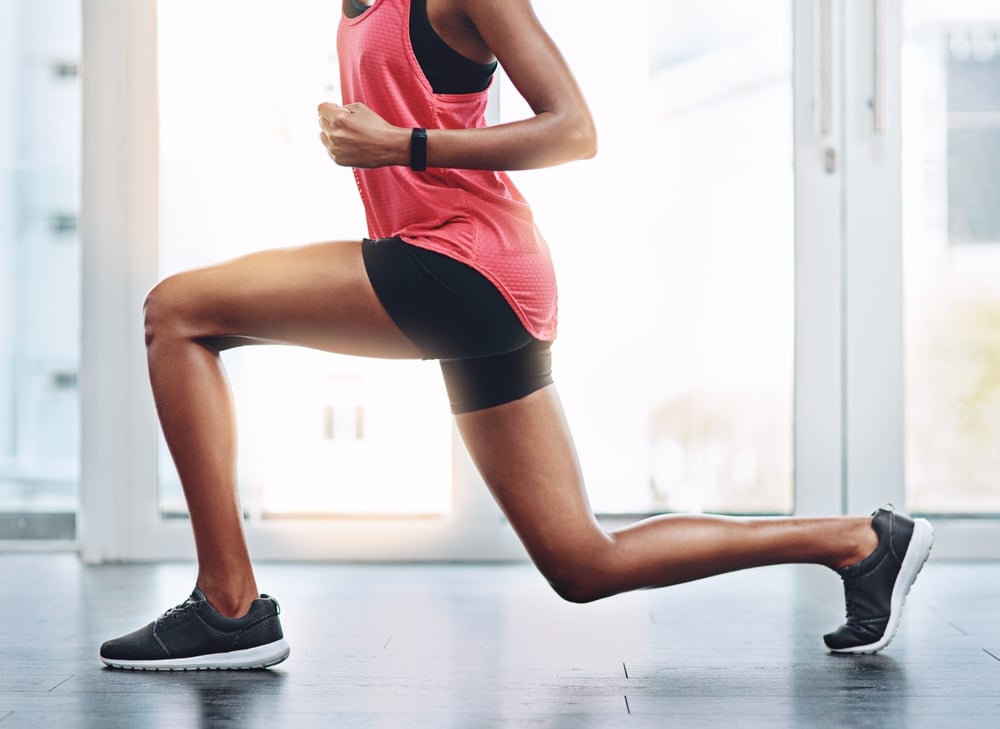
When analyzing a standard fitness routine, the vast majority of movements occur strictly in a forward and backward plane—think of traditional squats, deadlifts, lunges, and walking on a treadmill. However, daily life is far more dynamic and unpredictable. You frequently step sideways to navigate an obstacle or twist awkwardly to retrieve an object from the backseat of your car. Incorporating lateral hip exercises trains your body for these everyday movements, ensuring that crucial muscle groups aren’t neglected by a routine limited to linear motions.
This is a fitness blind spot well worth addressing.
Your hips are designed for multi-directional mobility. The outer hip muscles, spearheaded by the gluteus medius, play a vital role in keeping your pelvis aligned and level whenever you balance on a single leg. Meanwhile, the inner thigh muscles, known as adductors, pull your leg inward and stabilize your posture as your weight shifts. If you focus exclusively on forward-and-backward exercises, both of these essential muscle groups fail to receive adequate engagement.
Below are seven effective lateral movements you can easily perform at home. The first exercise receives the most detailed breakdown because it builds the foundation for the skills supported by the remaining six: mastering your balance and catching your weight when pushed off-center. The other movements serve as quick, highly efficient additions to any existing routine.
Getting Ready and Safety Precautions
A significant portion of these movements require single-leg stability. To ensure safety, perform them near a sturdy piece of furniture, such as a kitchen counter or a heavy chair, so you can easily grab onto it for support if needed.
Anyone who has undergone a hip replacement should consult their orthopedic surgeon or physical therapist before attempting these exercises. Several of these movements involve bringing a leg across the midline of the body or combining deep hip flexion with rotation—specifically the crossover step, curtsy lunge, star reach, and hip airplane. Medical professionals frequently advise patients to avoid these specific angles post-surgery.
The same cautious approach applies if you have experienced a recent fall, suffer from dizziness upon standing, or are pregnant. Always consult your healthcare provider or midwife to determine which movements are appropriate for your specific situation. While normal muscular exertion is expected, sharp joint pain or a sudden pulling sensation in the groin is a clear signal to stop immediately.
1. Side Step to Single-Leg Balance
This is the foundational movement to master first.
Imagine someone accidentally bumping into you on a crowded transit platform. Your nervous system has only a fraction of a second to fling a foot outward to catch your body weight and prevent a fall. This reflexive stepping action is a learned physical skill.
Insights From Balance Research
Researchers based in Toronto investigated how individuals handle unexpected lateral disruptions. In a study published in *The Journals of Gerontology*, healthy, active participants stood on a platform that unexpectedly jolted sideways while researchers documented their recovery tactics.
Participants aged 65 to 73 required significantly more corrective steps and upper-body arm movements to regain stability than younger adults aged 20 to 30. Specifically, crossing one foot over the other proved exceptionally challenging for the older cohort. During stepping-in-place trials, the swinging foot of the older participants collided with their standing leg in 55% of the tests, compared to only 8% among the younger group.
The study authors highlighted that sideways falls are not only more frequent among older adults but are also statistically associated with a higher risk of hip fractures than falls in other directions. They proposed that difficulty managing sideways steps could serve as an early indicator of balance vulnerability.
While this particular study focused on older adults, practicing these lateral mechanics is beneficial long before reaching age 65. This specific drill rehearses controlled sideways stepping, though it should be viewed as functional movement practice rather than a guaranteed preventative measure against falls.
Step-by-Step Execution
- Position yourself sideways next to a counter, keeping your feet close together and placing one hand lightly on the surface for support.
- Execute a rapid, wide lateral step using the leg located farthest from the counter.
- Land gently, ensuring your knee bends and tracks directly over your toes.
- Lift your opposite foot entirely off the floor and maintain a stable single-leg balance for two to three seconds.
- Return to the starting stance. Complete six to eight repetitions before switching to the opposite side.
Focus on quiet landings. A heavy thud indicates that the floor absorbed the shock, so you should slow your descent to ensure a fully controlled step.
Adjusting the Difficulty
Easier: Reduce the width of your step and keep your hand resting on the support counter throughout the entire movement.
Harder: Increase your stepping speed, release your grip on the counter, or slowly turn your head from side to side while maintaining your balance.
2. Slow Crossover Step
Building upon the exact foot pattern that presented challenges for participants in the Toronto research, this drill utilizes the same mechanics performed at a deliberate, controlled pace.
Position yourself alongside your support surface. Step your right foot across the front of your left leg, then step your left foot outward to the side. Next, cross your right foot behind your left leg, followed by another outward step with your left foot. Continue this weaving pattern for ten total steps, then reverse direction and travel back the other way.
To wrap up, integrating lateral movements into your fitness routine ensures a well-rounded physique that mirrors the unpredictable physical demands of daily life. By regularly training your hips to move sideways and handle shifts in gravity, you build lasting stability, improve functional balance, and protect your joints from everyday strain.
Always maintain a slow and controlled tempo. Keep a close eye on your footing to ensure your feet do not cross paths or clip one another. Focus entirely on proper form first, allowing speed to develop naturally once the movement pattern feels completely automatic.
This dynamic motion closely resembles a choreography sequence. By the time you reach your eighth repetition, your hip joints will provide clear tactile feedback regarding the alignment and execution.
Incorporating the Curtsy Lunge
While traditional lunges typically travel straight back, this variation introduces a diagonal trajectory by moving both backward and across your midline.
Begin by standing upright. Step your right foot backward and diagonally toward the left side, mimicking a formal curtsy stance. Lower your body by bending both knees until your front thigh is nearly parallel to the floor, or drop only as low as you can comfortably control. Drive upward through your front heel to return to the starting position.
Ensure that your front knee stays aligned directly over your toes throughout the movement. It will naturally try to buckle inward; actively fighting against this inward pull is precisely how the outer hip muscles are conditioned. Complete eight to ten repetitions on each side.
Working out in a confined area? This particular movement requires very little space, fitting comfortably within an area the size of a single yoga mat.
Mastering the Star Balance Reach
This exercise incorporates three distinct directions within a single foundational setup.
Stand firmly on your left leg, maintaining a gentle bend in the knee while keeping a hand close to a stable surface like a counter for balance. Extend your right foot forward and lightly tap the floor. Return the foot to the starting position without placing your weight down. Next, tap your foot out to the side, bring it back, and finally tap it straight back behind you. Completing all three taps constitutes one full round.
Perform five complete rounds before switching to the opposite leg.
Your stationary standing leg bears the entirety of the workload here. Your hip, knee, and ankle joints will execute continuous micro-adjustments as your center of gravity shifts in each direction. If your balance begins to wobble excessively, simply tap your foot closer to your body to regain stability.
Executing the Standing Hip Airplane
Rotational movement is a plane of motion that standard squatting and lunging routines frequently overlook.
Stand on your left leg while lightly holding onto a countertop. Hinge forward at your hip crease until your torso angles downward toward the floor, allowing your right leg to float up and extend straight behind you. Keep your spine in a neutral, elongated position.
From this position, rotate your pelvis open by pivoting your right hip upward toward the ceiling. Pause briefly, then slowly rotate the pelvis back down until both hips face squarely toward the floor. This counts as a single repetition.
The range of motion will naturally be quite small, which is entirely normal. Begin with five slow repetitions per side. You will experience a deep muscular engagement in the back and lateral aspects of the standing hip—areas that seldom encounter this type of demand.
Trying the Short Copenhagen Plank
While lateral training movements predominantly condition the outer hip muscles, this specific exercise shifts its primary focus inward.
The standard Copenhagen plank—where only the uppermost foot rests elevated on a bench—is exceptionally challenging and originates primarily from athletic conditioning protocols. Conversely, the modified short version supports the top leg at the knee joint instead, rendering the movement much more approachable.
Lie down on your side adjacent to a stable chair or low bench, propping your upper body up on your forearm with your elbow positioned directly beneath your shoulder. Place your top leg onto the chair seat so that the edge of the seat rests right at or slightly above the inner knee. Allow your lower leg to hang freely below.
Drive downward firmly through your upper leg to lift your hips upward until your entire body forms a straight line from head to toe. Maintain this contraction for 10 to 20 seconds before gently lowering your hips back down. Complete two to three holds per side, and immediately discontinue the exercise if you experience any sharp discomfort in the groin region.
The referenced data stems from formal sports science research. A study published in the British Journal of Sports Medicine tracked 35 semiprofessional men’s football squads in Norway divided into two separate cohorts. One group integrated Copenhagen adduction movements—incorporating three distinct tiers of difficulty—performed three times weekly during the preseason and maintained once weekly throughout the competitive season.
Over the course of a typical regular-season week, only 13.5% of the players utilizing this targeted protocol reported experiencing groin discomfort, compared to 21.3% among the control group that followed standard training routines.
It is worth noting that the modified chair variation outlined here may not precisely mirror the exact progression levels utilized in the trial. Furthermore, because the study focused on male athletes, the findings do not automatically apply uniformly to all populations. Nevertheless, the underlying takeaway is that integrating a straightforward inner-thigh conditioning movement into a routine on a consistent basis produced a notable, quantifiable difference for the participants in that study.
To wrap things up, integrating these specialized stability, rotation, and adduction movements into your regular physical routine can significantly improve overall hip function and control. By prioritizing proper form, pacing your movements carefully, and maintaining consistency, you provide your lower body with the diverse mechanical challenges it needs to stay resilient and balanced.
Beginner Modification: Side-Lying Inner Thigh Raise
Lie down on your side, keeping your lower leg fully extended. Bend your upper knee and place that foot flat on the floor directly in front of your bottom knee. Slowly raise your straight bottom leg up a few inches, pause briefly at the top, and lower it back down with control. Complete 10 to 12 repetitions on each side. Once this variation feels comfortable, you can progress to the full plank exercise.
Unilateral Weighted Bag Walk With Lateral Steps
The final movement utilizes a simple shopping bag.
Fill a backpack or shopping bag with a moderate amount of weight, such as several bottles or cans. Grasp the bag in your right hand, keeping your arm extended straight down by your side. Maintain an upright posture, ensuring your torso does not lean toward the weighted side. Step sideways ten paces to your left, then reverse direction and step ten paces back to your right.
Switch the bag to your opposite hand and repeat the process.
The offset load naturally attempts to pull you off balance, and stepping sideways reduces the stability of your base. Your core muscles and both hip regions must engage simultaneously to keep your body aligned. This exact stabilization mirrors the demands of carrying groceries across a parking lot in real life.
If you catch yourself leaning toward the weight, the load is too heavy. Remove a few items and try again with a lighter resistance.
Conclusion
Incorporating lateral movements into your fitness schedule does not require a complete overhaul of your current routine. Simply select three of these exercises to tack onto the end of an existing workout, or group them together into a short, dedicated session two or three times a week. Keep the single-leg balance side step in every routine while rotating the other choices. As movements begin to feel stable and unchallenging, progress to the advanced variations or increase your repetition count.
It is easy to overlook side-to-side training, yet your hips rely on these pathways daily, whether you are stepping off an uneven curb or navigating a crowded area. Dedicating just a few minutes each week to lateral conditioning provides your stabilizing muscles with the practice they often lack. Should any movement cause persistent joint discomfort, or if you manage a preexisting condition affecting your hips, knees, or balance, consult a physical therapist to tailor these movements safely to your needs.